
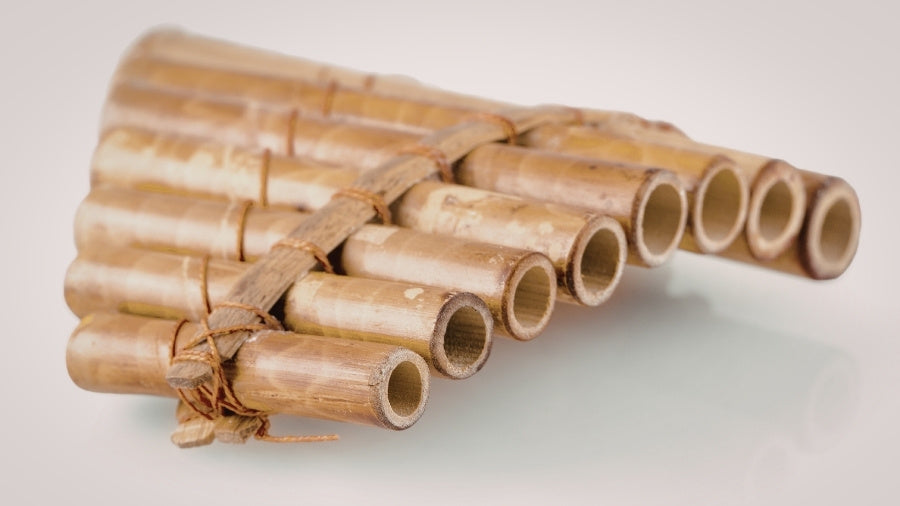
Panpipes are one of the oldest wind instruments still played today, valued for their warm, expressive sound and simple playing style. They remain popular with beginners, educators, and world-music fans because they are easy to start, intuitive to learn, and deeply rewarding as skills develop over time.
What are Panpipes?
Panpipes are a musical instrument made from a row of hollow tubes of different lengths, each producing a single note when blown across the top. Sound is created by directing air across the tube openings rather than blowing into them. Originating from the Andean regions of South America, panpipes are a real, fully playable musical instrument, not a souvenir. Modern panpipes are commonly used for learning music, performance, meditation, and education. With basic care—keeping them dry, clean, and away from extreme heat—they are durable and long-lasting, making them a reliable choice for beginners and serious players alike.
Siku panpipes are the most recognisable and widely used type of panpipes. Unlike generic panpipes, sikus are traditionally arranged in two rows of pipes that work together to create melodies. This design makes them especially suitable for beginners, as notes are clearly separated and easy to control. Siku panpipes are commonly used in Andean music and are the standard starting point for most learners.
The History of Panpipes
Panpipes originate from the Andean regions of Peru, Bolivia, and Ecuador, where they have been played for centuries in communal music, ceremonies, and celebrations. While rooted in tradition, panpipes have evolved into a versatile modern instrument used worldwide in education, performance, and contemporary music.
How Panpipes Are Made
Panpipes are made from materials such as bamboo, wood, or synthetic alternatives. Handmade bamboo panpipes offer warmer tone, better resonance, and greater consistency compared to mass-produced or plastic versions. Craftsmanship matters because well-made panpipes stay in tune longer, feel better to play, and last significantly longer with proper care.
Does the Material Affect the Sound of Panpipes?
Natural materials like bamboo produce a warmer, fuller sound with better tonal balance and tuning stability. Cheaper materials often sound thinner and less consistent. For beginners, bamboo panpipes offer the best balance of tone quality, durability, and ease of play.
Different Types of Panpipes
There are several types of panpipes, with siku panpipes being the most common and beginner-friendly, followed by multi-row panpipes that offer a wider range and suit more advanced players, and decorative panpipes that are mainly for display and are often not tuned or fully playable. Panpipes also come in small and large sizes: small panpipes are easier to handle, require less breath control, and are ideal for beginners, while large panpipes produce deeper, richer tones and only require slightly more breath and reach. Larger panpipes are not harder to play, just different, and the best choice comes down to comfort and the type of sound you prefer rather than skill level.
How to Play Panpipes
What are Panpipes Used for?
Music performance, Music education, Meditation music, sound therapy, Cultural music, ceremonial music and even modern music. Panpipes appear in film soundtracks, world-fusion music, contemporary recordings, and experimental genres. Their distinctive tone remains relevant today and blends well with modern instruments and creative styles.
Choosing the Right Panpipes (Buying Guide)

For beginners, bamboo siku panpipes in a manageable size are the best choice, as natural materials offer better tone, durability, and tuning stability, making learning more enjoyable. Panpipes are also easier to start with than other Andean flutes like the quena because each pipe produces a fixed note, helping beginners achieve early success. To ensure authentic sound, comfort, and long-term quality, choose well-crafted, fair-trade panpipes from a trusted seller with proven craftsmanship and positive reviews.
View our handmade bamboo panpipes.
Panpipes (Frequently Asked Questions)
Are panpipes tuned?
Yes, properly made panpipes are tuned musical instruments.
Can children play panpipes?
They are not toys and should only be used under adult supervision.
Are panpipes loud?
They can be played quietly or loudly depending on breath control.
Do panpipes break easily?
No they do not break easily when handled with care. Its recommended to store them away from direct sunlight, avoid dropping them, and keep them dry.