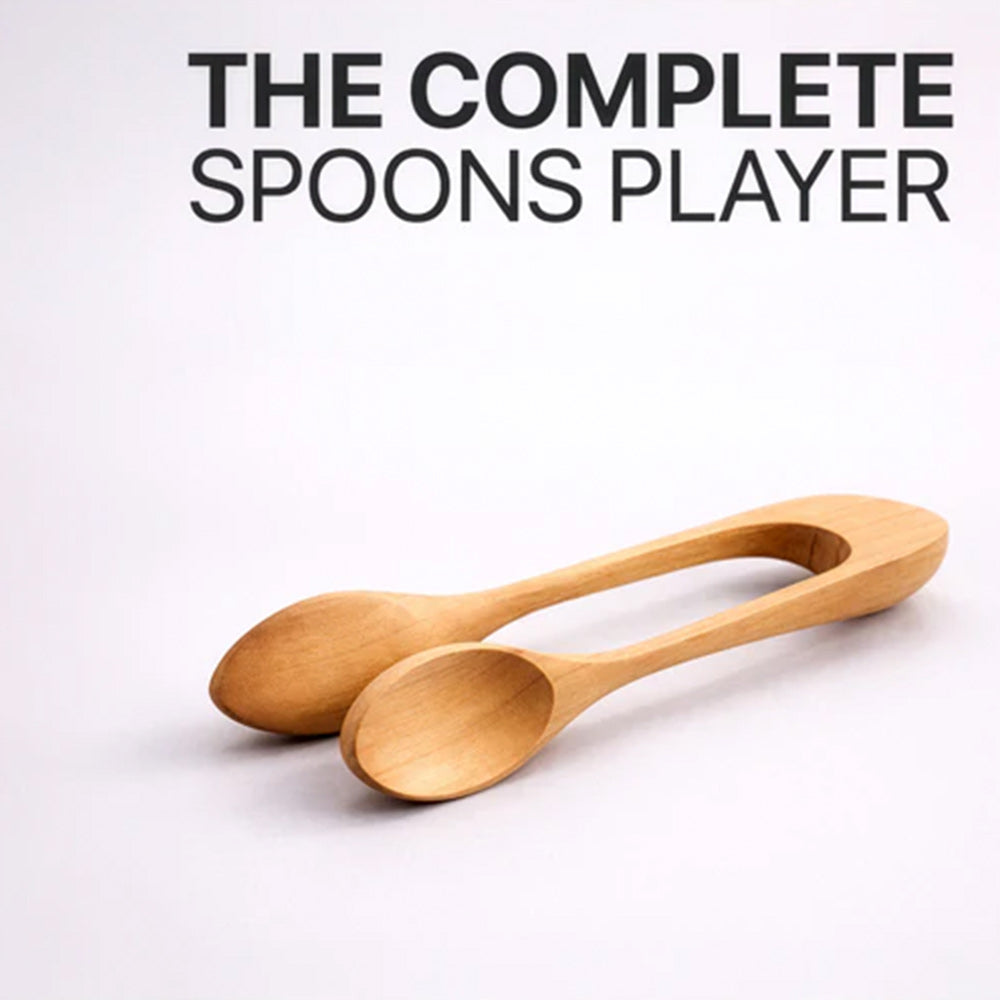
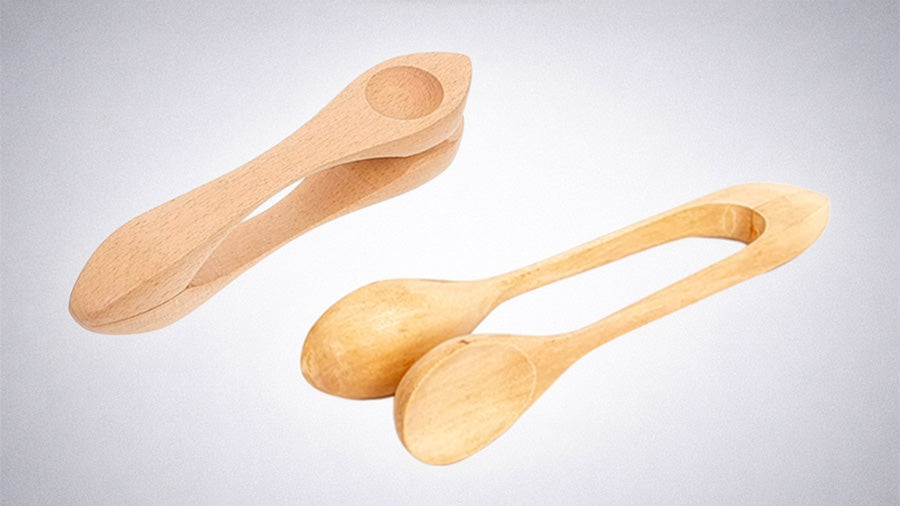
Choosing between small and large musical spoons isn’t about the physical size of the instrument in your hands — it’s about the depth of the spoon cup and thickness of the wood. These two factors directly affect pitch, tone, and playing feel. Understanding the difference helps you choose the right spoons for your playing style, musical setting, and sound preference.
What Size Really Means in Musical Spoons
When we say small or large musical spoons, we are referring to the spoon bowl (cup) depth and mass, not the overall length. Shallow, thinner spoon cups produce a brighter, higher-pitched click, while deeper cups carved from thicker wood create a fuller, bass-heavy tone. Two sets of spoons may look similar, but their sound can be very different depending on this detail.
Small Musical Spoons
Small-cup musical spoons produce a higher-pitched, crisp sound with fast attack. Because the spoon bowls are shallower and lighter, they respond quickly to movement and create clear rhythmic definition. These spoons are ideal for fast playing, intricate patterns, and styles where articulation matters more than low-end resonance. They work well in folk sessions, dance music, and situations where the spoons need to cut through other instruments.
Large Musical Spoons
Large-cup musical spoons have deeper bowls and thicker wood, which adds mass and lowers the pitch. This produces a warmer, bass-focused tone with more body and resonance. The sound feels rounder and less clicky, making these spoons better suited to slower grooves, accompaniment, and solo rhythmic work. Players who want a grounded, percussive feel often prefer deeper spoon cups.
How Wood Thickness Affects Tone and Feel
Thicker wood doesn’t just change pitch — it changes how the spoons feel in your hands. Heavier spoons provide more resistance, which can feel stable and powerful but slightly slower to respond. Thinner spoons feel lighter and more agile but offer less low-end presence. Neither is better — it’s a trade-off between speed and weight, brightness and depth.
Which Musical Spoons Are Best for Beginners?
For beginners, musical spoons with medium-depth spoon cups are usually the best place to start, as they strike a balance between clarity and warmth without feeling too sharp or too heavy. Very shallow cups can sound bright but unforgiving, while very deep cups may feel slow and tiring at first. A balanced set allows new players to focus on rhythm and technique rather than fighting the instrument.
As your playing develops, choosing spoons becomes more about style and sound preference: shallow spoon cups suit fast rhythms and traditional folk playing where articulation matters, while deeper cups and thicker wood produce a warmer, bass-heavy tone that works well for slower grooves and accompaniment. Ultimately, small musical spoons offer speed and brightness, while larger cup depths provide depth and resonance—the key difference lies in spoon cup depth and wood thickness, not the physical size of the spoons, making it easier to choose a set that genuinely matches your musical goals.