
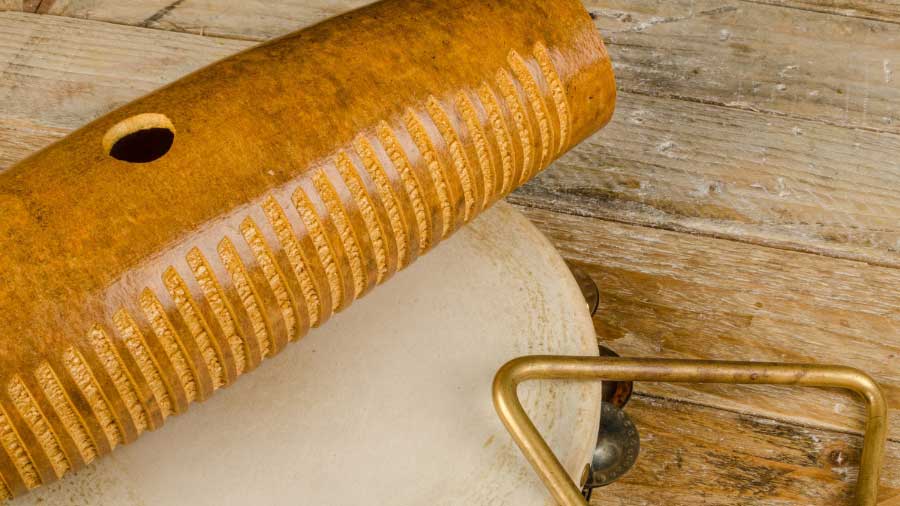
The güiro is a unique percussion instrument that adds texture and rhythm to music. It’s a wooden instrument with a serrated surface that produces a rasping sound when scraped with a stick. Originating from Latin America, it’s traditionally made from a hollow gourd and enhances rhythm in music. Its exact history is unclear, but similar instruments like the Aztec omitzicahuastli show its ancient roots. Simple to play yet versatile, the güiro is essential in Latin American music.
Other names for the Guiro
The percussive instrument goes by many other names such as Güira (the metal version of a Guiro), rascador, güícharo, candungo, carracho, rayo
How is it pronounced?
Wee-row or Gwee-roh
History of the Güiro Instrument
The güiro has deep roots in Caribbean and Latin American music. Traditionally made from hollowed gourds, early forms are associated with Indigenous Caribbean cultures, including the Taíno. Over time, the güiro became an important rhythmic instrument in styles including Cuban son, cumbia, merengue and salsa.
What are they usually made from?
Where to Buy a Guiro?

How to Play A Güiro
To play a güiro, hold the instrument securely without restricting its vibration and move the scraper across the grooves to create its unique sound. Experiment with up and down movements to discover how your instrument responds. Once you can produce a controlled sound, practise keeping a steady rhythm and listening to how the güiro fits alongside other instruments.
Developing good timing and learning how to combine these techniques will allow you to progress from simple scraping to musical rhythm patterns. To care for your guiro wipe it with a soft cloth after playing and avoid harsh chemicals that could damage the finish. Store it somewhere dry and away from direct sunlight and extreme humidity to help protect its sound and condition.
Want to learn the güiro in more depth? Get The Complete Guiro Player →


