
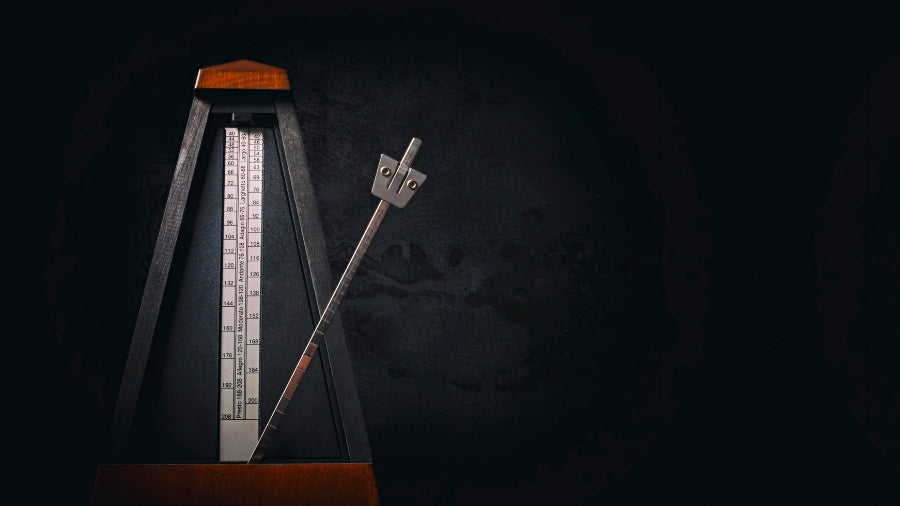
This guide explains how a metronome can improve your rhythm, the purpose of the device, how to use it to practice your rhythm, and more.
What Is a Metronome?
A metronome is a device that produces a steady pulse or beat to help musicians stay in time. They come in various forms: mechanical metronomes, often with a pendulum that ticks back and forth, or digital metronomes, usually available as smartphone apps. These days, I use a metronome on my phone, which is incredibly loud and convenient for drumming practice. There are many useful mobile phone apps that allow you to adjust the tempo and time signatures.
The Purpose of the Metronome
The metronome's purpose is to provide you with a reference so that you can practice rhythms, stay on beat, and record music in time. Professional musicians, especially those working in studios, often use a click track to keep everyone in sync during recording sessions. For musicians in movies or TV shows, the click track may change tempo depending on the scene. Still, its purpose remains the same—to ensure everyone stays together, making it easier to piece together different recordings and sound cohesive.
Developing Rhythmic Acuity
Practising with a metronome isn't just about staying on time. It is to help you develop rhythmic acuity, a musical termfor your ability to maintain a steady rhythm despite distractions and external factors that might pull you offbeat. In a group setting and with less experienced drummers or musicians, people may play offbeat or in different time signatures.As a percussionist or drummer, one of the key skills is to hold the rhythm steady even when the rest of the group isn'taligned.
Fun Metronome Game: "Avoiding the One"
One way to engage with your metronome is to challenge yourself by avoiding playing on the "one" (the first beat of the measure). For this game you will need to listen to the metronome and play any rhythm you like—avoid landing on the first beat of the measure. This exercise aims to improve your awareness of the pulse while also honing your ability to play complex rhythms and stay in sync with the metronome. It forces you to stay focused and aware of the subtle shifts in timing while keeping the rhythm steady.
For example, when the metronome clicks on the first beat of each measure, avoid playing during that click and try to get as close as possible to the pulse without hitting it. Over time, you can make the exercise more difficult by increasing the complexity of the rhythm or speeding up the tempo.
Practicing at a Slow Tempo
Another helpful way to work with a metronome is by setting it to a slower tempo. Many people find it harder to stay in time at slower tempos because there's more time between each beat, making it easier to lose the rhythm. Try setting your metronome to 60 BPM (beats per minute) or even slower, and practice maintaining a steady beat. Playing to a slower tempo forces you to internalize the rhythm and improves your timing, making you more precise when playing at faster tempos.
You can also try vocalizing rhythms at slow tempos—down to 40 BPM if you're pushing yourself. This will help you solidify your internal clock, and you may find that it becomes more challenging to maintain focus at slow tempos, making it a great training tool.
Final Tips
If you're playing a loud instrument like drums, the sound may drown out the metronome, making it harder to hear the pulse. To avoid this, use headphones (but keep the volume moderate to protect your hearing) or leave one earphone out to stay aware of your surroundings. Experiment with different time signatures, such as 3/4 or 7/8, to challenge your timing and rhythm skills.


