
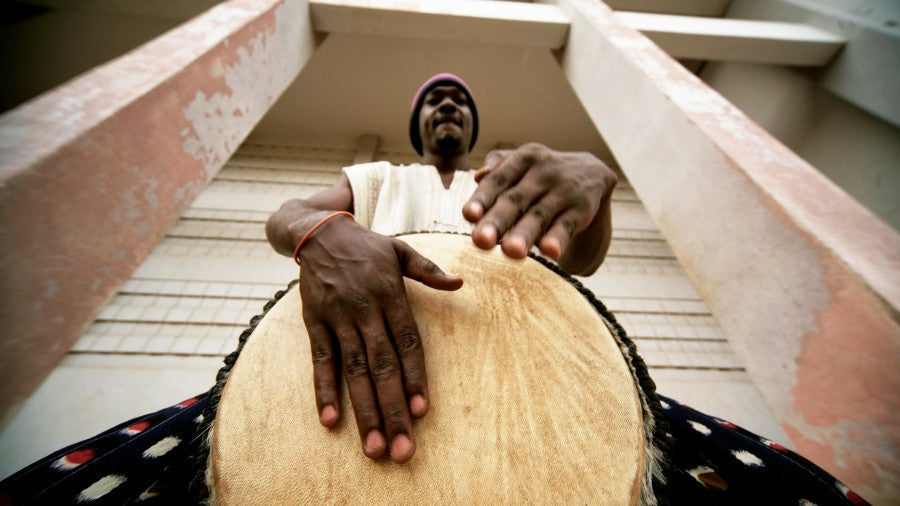
Reggae rhythms are known for their relaxed groove and distinctive rhythmic feel. While reggae is often associated with drum kits and percussion ensembles, it can also be played effectively on hand drums such as the djembe. By combining bass tones, muted slaps, and finger strokes, you can recreate the feel of a reggae rhythm using just your hands. This guide explains a simple eight-stroke reggae pattern for the djembe, breaking the rhythm into smaller sections so you can learn it step by step.
Understanding the Basic Idea
This reggae groove is built from an eight-stroke pattern that combines several hand techniques to create a flowing rhythm on the djembe. The pattern blends finger taps, thumb strokes, muted slaps, and bass tones, each contributing a different sound that adds texture and movement to the groove. While the rhythm itself is relatively simple, subtle finger actions give it a natural reggae feel. To make it easier to learn and practice, it helps to break the pattern into two parts: the first four strokes and the second four strokes.
The First Four Strokes
The opening section of the groove follows a simple Right–Right–Left–Right sequence, with each stroke producing a slightly different sound. The pattern begins with the right-hand fingertips striking the drum lightly, followed by a quick accent from the right-hand thumb. Next comes a left-hand muted slap that creates a controlled, dampened tone, and the group finishes with another right-hand fingertip stroke. As this fourth stroke is played, the right hand naturally begins lifting to prepare for the next movement, which can cause the sound to become slightly deeper. This variation is normal and can actually add character and flow to the groove.
Completing the Eight-Stroke Pattern
The remaining four strokes complete the reggae rhythm and introduce a stronger bass element to the pattern. Both hands strike the drum together, with the right hand producing a bass tone while the left hand creates a muted slap. This is followed by a right-hand thumb stroke, then a quick left-hand finger stroke that is often played as a small double movement. The final stroke is a left-hand open tone, which may sound slightly different because the right hand is already lifting to begin the next cycle. At slower tempos the seventh and eighth strokes may sound similar, but as the speed increases the difference becomes clearer. When repeated smoothly, these eight strokes combine to create a flowing reggae groove on the djembe.
Adding Shuffle or Swing
A defining characteristic of many reggae rhythms is their shuffle or swing feel. Instead of playing each stroke with perfectly even timing, the spacing between notes is slightly stretched, creating a more relaxed and rolling groove rather than a rigid, mechanical rhythm. This swing feel is central to reggae’s laid-back character. Once you are comfortable with the basic pattern, it is useful to practice both straight timing for a steady groove and a shuffled or swung version for a more authentic reggae feel, as working with both approaches helps develop stronger rhythmic control.
Playing Along with Music
One of the best ways to learn this rhythm is by playing along with reggae backing tracks. A simple acoustic reggae track works well because it allows you to clearly hear how the djembe fits into the groove. Start by playing the pattern slowly and focus on consistency. As your control improves, gradually increase the tempo and experiment with different swing feels. This approach helps you develop both timing and musicality.
Why the Rhythm Feels Unique
One interesting aspect of this reggae djembe pattern is the placement of the bass tone. In many Western rhythms, the strongest bass accent appears on the first beat. In this pattern, the bass appears later in the sequence, creating a different rhythmic emphasis. This unusual placement is part of what makes the groove feel distinctive and engaging. Once you become comfortable with it, the rhythm can be played at many different tempos and adapted into various musical situations.
The only Djembe Drum Guide You'll Ever Need

If you want more than basic reggae playing tips and want to develop your djembe technique, and build real rhythmic confidence, The Complete Djembe Drum Player will give you a clear practical path forward. Designed for beginners and advanced players, it combines tuning guidance, clear diagrams, structured practice sessions, and progressive lessons that build tone, timing, and control without unnecessary complexity.
Download the Complete Djembe Drum Player eBook


