
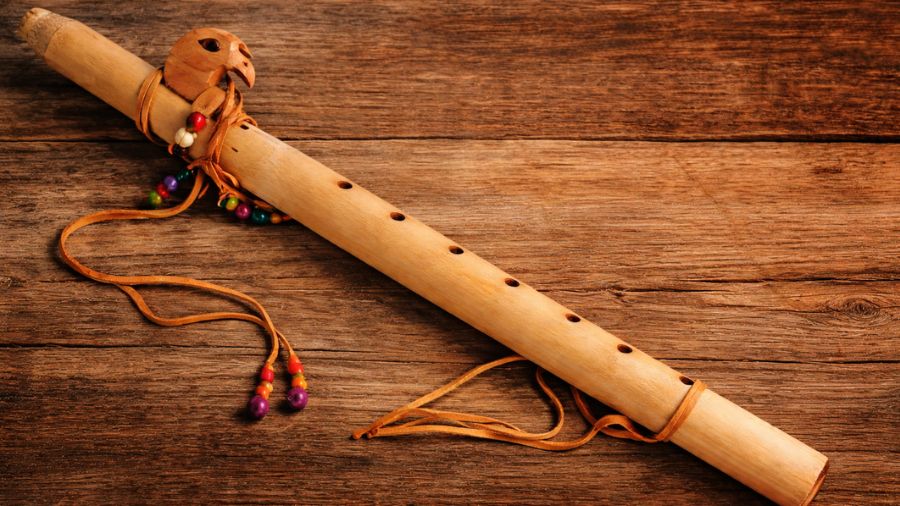
The Cherokee flute (often called a Native American flute) is one of the most approachable wind instruments you can learn. It’s intuitive, expressive, and doesn’t require prior musical experience, which is why many people fall in love with it almost immediately. In this guide, you’ll learn how to choose the right flute, produce your first sound, hold it correctly, and start playing simple melodies with confidence.
Why the Cherokee Flute Is So Beginner-Friendly
One of the Cherokee flute’s greatest strengths is how naturally it responds, allowing you to start playing without reading sheet music, memorising note names, or understanding music theory. Its simple layout encourages exploration and improvisation, making it equally appealing to complete beginners and experienced musicians seeking a more expressive, relaxing instrument. When choosing your first flute, it’s best to avoid bass models, as their wider finger spacing and extra reach can feel uncomfortable early on; instead, start with a standard or higher-pitched flute and make sure the description does not include the word “bass.”
How to Produce Your First Sound
Making a sound on the Cherokee flute is straightforward: place the mouthpiece to your lips and blow a steady stream of air, with no complex embouchure required. As you gain confidence, you can add a light tongue at the start of each note by gently saying “tu” to create a cleaner, more defined attack, though this is optional. The priority at the beginning is relaxed breath and consistent airflow.
How to Hold the Flute Correctly
Begin by placing your left hand on the flute, with the left thumb underneath where there are no holes to support the instrument. Cover the first hole with your left index finger, the second with your middle finger, and if there is a third left-hand hole, keep your ring finger covering it while you’re learning. Your right hand then covers the remaining holes using the index, middle, and ring fingers in order, making sure each hole is fully sealed. Clean, stable notes come from complete coverage, and this control develops quickly as muscle memory builds with practice.
Playing Your First Scale
With all finger holes covered, the flute produces its lowest note. From there, raise the pitch by lifting one finger at a time, starting with the bottom finger on your right hand and working upward. When you reach the left hand, keep the left ring finger down while lifting the middle finger first to maintain balance and accurate pitch. To move back down, simply reverse the process, placing one finger down at a time. This gradual, step-by-step movement forms the basis of most melodies and is what makes the Cherokee flute feel so intuitive and forgiving to play.
Improvising and Creating Melodies
Once you’re comfortable moving through the scale, begin experimenting freely. The Cherokee flute encourages improvisation, and when played slowly and with intention, almost any note combination will sound musical. Try varying finger patterns, rhythms, and note lengths, and allow the instrument’s natural response to guide you. This openness is what makes the flute feel so expressive and personal—simple phrases can carry depth, emotion, and a calming quality without requiring complex technique.
Hearing Different Flute Ranges
Cherokee flutes are available in a wide range of keys and sizes, each offering a distinct character and feel. Higher-pitched flutes tend to sound bright and clear, while lower-pitched ones produce deeper, warmer, and more resonant tones. Exploring different ranges helps you discover which sound connects best with you, both emotionally and physically, and many players gradually build a small collection to experience these contrasts—often turning to respected makers such as High Spirits for their consistent tone and craftsmanship.
Where to buy a Cherokee Flute?

The Cherokee flute is an instrument that rewards curiosity rather than discipline. With a simple blowing technique, a logical finger layout, and no requirement for formal music reading, it invites you to play from the very first moment. Start with a comfortable, non-bass flute, focus on clean finger coverage, and take your time exploring sound. With just a little practice, you’ll be creating expressive music sooner than you expect.


