
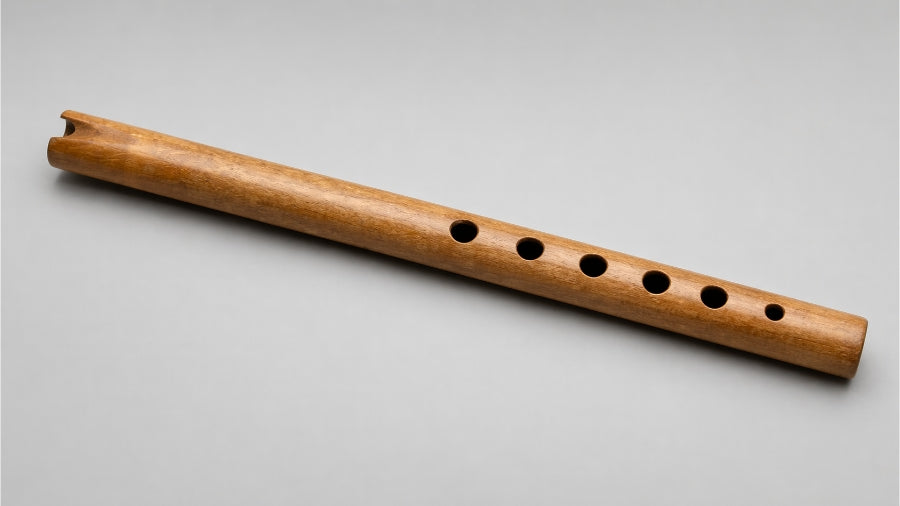
Learning to play the quena starts with one key skill: producing a clear, consistent tone. The fingerings are relatively straightforward, but because the quena has no mouthpiece to direct the airflow, beginners need to learn the correct lip position, air direction and breath control. Once you find the right embouchure, playing notes and melodies becomes much easier. This guide will show you how to hold and blow the quena, develop a clear tone, use the finger holes and build the foundations you need to start playing.
What is a Quena Flute?
The quena is a traditional Andean open-notch flute, commonly made from wood or bamboo. Instead of blowing into a mouthpiece, you direct air across a V-shaped notch at the top, producing its warm, earthy and slightly breathy tone. It is widely used in traditional Andean and Peruvian music, as well as world music, film scores and solo performance. The quena can be harder to start than a recorder because small changes in lip position, air direction and breath pressure affect the sound, but once you can produce a clear, stable tone, the fingering and movement between notes become much easier. As handmade quenas can vary in tuning, use a tuner to identify the notes on your individual instrument.
Learn to Play the Flute

The Complete Flute Player takes you from the fundamentals of producing a clear tone through fingering, breath control, rhythm and playing techniques, with practical exercises and songs to develop your playing.
Download The Complete Flute Player →
How to Play the Quena
Playing the quena starts with positioning the flute correctly, forming the right embouchure and directing a focused stream of air across the notch.
Hold and Position the Quena
Hold the quena vertically and rest the top edge lightly below your bottom lip. Unlike a recorder or whistle, the quena has no mouthpiece to direct the air, so you need to blow across the V-shaped notch rather than directly into it. Keep the instrument comfortable and relaxed against your face.
Form the Correct Embouchure
Bring your lips together as if making an “F” sound, creating a small opening no wider than the quena’s notch. Keep your lips firm against your teeth and gently move your jaw forward to support the position. The goal is a narrow, focused stream of air; if the opening is too wide or your lips relax, the air becomes scattered and the tone weakens.
Find a Clear Tone
Blow gently across the notch and make very small adjustments to the flute's angle—up, down, left or right—until the air splits cleanly across the edge and the note becomes clear. Everyone's facial structure is different, so focus on finding the position that works for you rather than copying an exact angle. A mirror can help you keep your lip opening small and stable while experimenting.
Control Your Breath and Play Notes
Once you find a clear tone, keep your lips and jaw stable and use steady, controlled air. Too little pressure can produce a weak, airy sound, while blowing too hard can make the note overly loud and affect the tone. Cover and uncover the finger holes to change notes, starting with the thumb hole before experimenting with the others. You can also create a simple tremolo effect by repeatedly lifting and replacing a finger over a hole. Once your tone is consistent, progress to scales and simple melodies.


