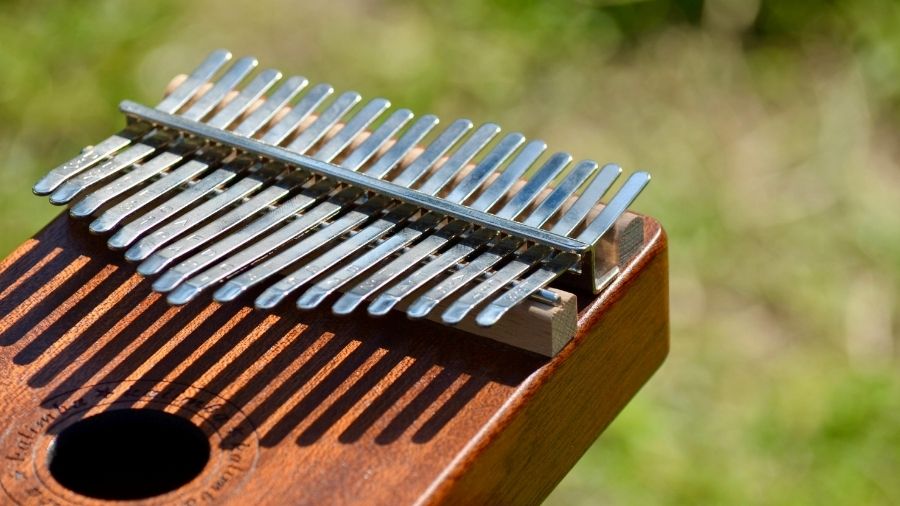
Kalimba dampening is the technique of muting or stopping notes from ringing so your playing sounds cleaner, more controlled, and more musical, done by lightly touching or resting a finger or thumb on a tine immediately after or just before plucking it. Kalimbas naturally have long sustain, which is part of their beauty, but without dampening melodies can blur together; this simple technique solves the common problem of excessive ringing by letting you control how long each note lasts, creating clearer phrasing, stronger rhythm, and more intentional melodies instead of a wash of overlapping sound.
How to Dampen Notes on a Kalimba
The most common method is thumb dampening. After plucking a tine with your thumb, gently rest the same thumb back onto the tine to stop it vibrating. You can also use your opposite thumb or a spare finger to mute neighbouring tines when needed. The key is light contact pressing too hard will choke the tone, while too little won’t stop the note.
When Should You Use Dampening?
Dampening becomes especially useful when playing faster melodies with overlapping notes, creating rhythmic patterns with space, recording your kalimba for a cleaner sound, playing chord shapes or layered parts, and adding contrast between long, ringing notes and short, percussive ones. Without dampening, all notes ring equally; with it, you gain control and clarity.
The Common Mistake
Many beginners avoid dampening because it feels awkward at first, while others overuse it and ruin the instrument’s natural resonance the goal isn’t to mute everything but to choose which notes ring and which stop, a balance that separates casual playing from intentional musicianship.
When dampening feels confusing, the real issue is usually understanding rather than hand technique, because it only makes sense once you grasp timing, rhythm, phrasing, and control. Without that foundation, players can hit notes but can’t shape the sound, which is why so many hit a plateau despite being able to play melodies.
Learn Kalimba Control the Right Way

The Complete Kalimba Player teaches dampening in context alongside rhythm, dynamics, phrasing, and technique, so you learn not just how to mute notes, but when and why to do it musically. Instead of isolated tips, the book shows how dampening fits into real melodies and recordings, guiding you from simple pieces to more expressive playing with clear control. Dampening isn’t an advanced trick—it’s a core kalimba skill, and once you understand it properly, your playing immediately sounds cleaner, more confident, and intentional.
Download the Complete Kalimba Player