
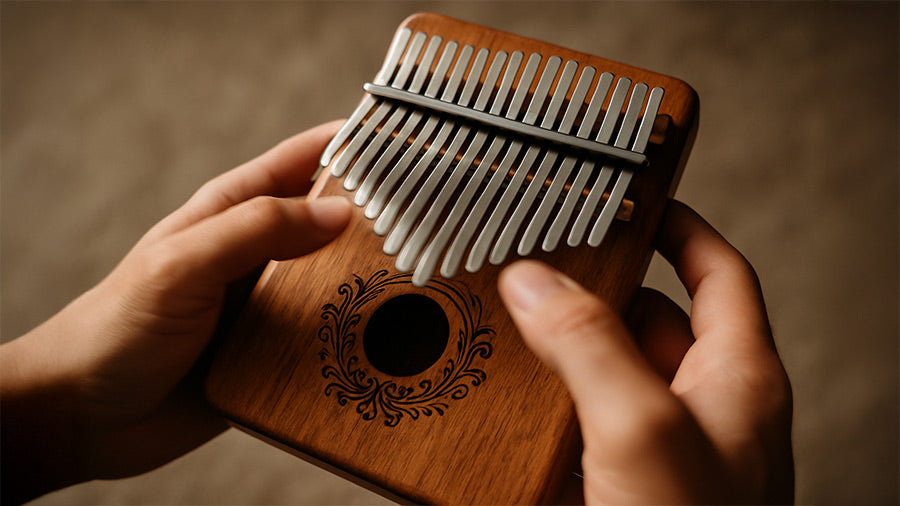
Once you’re comfortable with basic melodies, a few simple techniques can instantly make your kalimba playing sound more expressive and musical. Tremolo, vibrato, and glissando are not difficult to learn, but they add movement, emotion, and flow to your playing when used intentionally.
1. Tremolo
Tremolo is created by rapidly alternating between two neighbouring tines using both thumbs. Keep your thumbs relaxed and close to the keys, aiming for an even, controlled flutter rather than speed. This technique adds intensity and sustain to held notes and works especially well in emotional or cinematic pieces.
2. Vibrato
Vibrato on the kalimba is achieved by gently rocking the instrument in your hands or subtly shifting thumb pressure while a note rings. The goal is to slightly alter the resonance rather than the pitch itself. Used sparingly, vibrato adds warmth and expression which makes simple melodies feel more alive.
3. Glissando
Glissando is produced by smoothly sweeping your thumb across multiple tines in one motion. Keep your thumb relaxed and let it brush the keys lightly rather than plucking each one individually. This technique creates a flowing, harp-like effect and is ideal for transitions, intros, and endings.
Learn to Play Kalimba Step-by-Step

Stop guessing and follow a clear step-by-step path designed for complete beginners. Instead of jumping between random tutorials, you’ll know exactly what to do from your first note. Learn how to hold the kalimba, understand how the notes work, and start playing real songs with short, focused lessons that are easy to follow and build real skill quickly. It’s a structured way to learn that saves you time, removes confusion, and helps you progress.


