
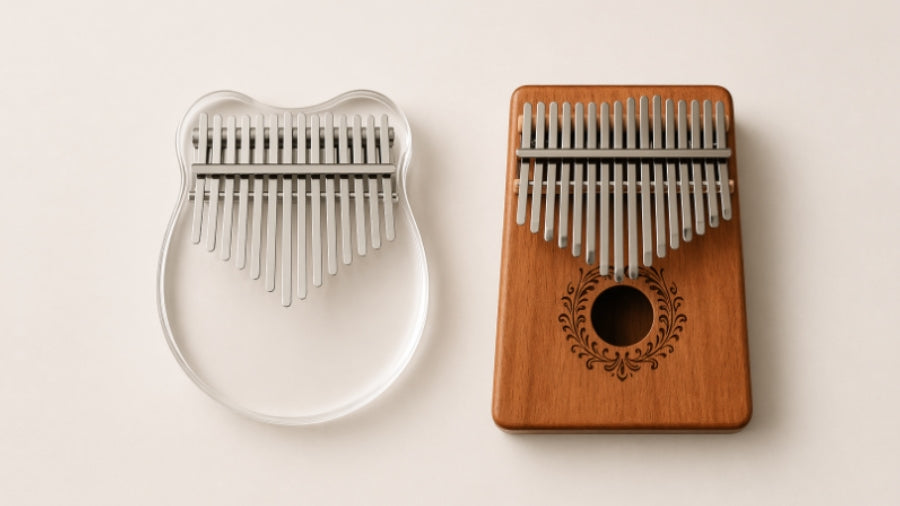
Side-by-side comparison of a clear acrylic kalimba and a carved wooden kalimba, both well-lit to highlight their different materials and designs.

Acrylic and wooden kalimbas may look similar in shape, but they differ significantly in sound, feel, sustainability, and playing experience. Neither option is automatically right or wrong—the best choice depends on how you plan to use the instrument and what you value most: tone, aesthetics, price, or long-term connection with the instrument. Below is a clear, practical comparison to help you decide.

Acrylic Kalimba

An acrylic kalimba is typically factory-made from clear or coloured plastic, offering strong visual appeal and resistance to humidity, so the body won’t warp or crack with climate changes. The trade-off is sound and sustainability: acrylic produces a brighter, sharper tone with less warmth and sustain because the body does not resonate naturally, relies almost entirely on the metal tines, and is made from synthetic, mass-produced materials, making it best suited for decorative use, novelty, or casual playing rather than long-term musical development.

Wooden Kalimba

Wooden This Yulin Kalimba (17 Note)

A wooden kalimba uses its solid body as a natural resonator, producing a warmer, fuller, and more balanced sound with better sustain and depth, making it more enjoyable for melodies and longer practice sessions. Paired with metal tines, wood delivers a naturally resonant tone with subtle variation, is more eco-friendly than synthetic materials, and offers strong long-term musical value, with the only real trade-off being minimal care to keep it dry and clean—making wooden kalimbas suitable for beginners through to advanced players who prioritise sound quality and longevity.

Which Kalimba Is Right for You?

Choosing the right kalimba comes down to sound, feel, and long-term satisfaction: acrylic kalimbas feel smooth and rigid with a clear but fairly flat sound, while wooden kalimbas feel warmer in the hands and produce richer resonance that responds more as your playing improves. Acrylic suits casual play or visual appeal with minimal upkeep, but if tone, sustainability, and lasting musical value matter, a wooden kalimba offers better sound quality and natural resonance, making it the preferred option for most beginners and advancing players.

Explore our wooden kalimbas.

Leave a comment

All comments are moderated before being published

Featured products

handcrafted antares panpipes from Peru
Antares Bamboo Panpipes
Sale price$44.00
Only 3 units left
quena andean flute with colourful case
Quena Andean Flute
Sale price$90.00
Only 1 unit left
The natural coconut shell 7 note thumb piano kalimba with carved gecko design held in the hand to show scale size.
Kuta Thumb Piano Kalimba 7 note - Natural
Sale price$55.00
Only 1 unit left

Blog posts

View all
Side-by-side comparison of a clear acrylic kalimba and a carved wooden kalimba, both well-lit to highlight their different materials and designs.

Acrylic Kalimba vs Wooden Kalimba (Comparisons)

MusicRyan Bomzer
Acrylic and wooden kalimbas may look similar in shape, but they differ significantly in sound, feel, sustainability, and playing experience. Neithe...
Woman holding a kalimba with a smaller kalimba and a kalimba tuner on a table

How to Choose a Kalimba Book for Beginners

MusicRyan Bomzer
Choosing the right kalimba book depends on how you want to learn and what stage you’re at. Some beginners want to play something straight away with...
Lima Nut Cluster and Maracas side by side

Lima Nut Cluster vs Maracas: What’s the Difference?

MusicRyan Bomzer
Lima nut clusters and maracas are both shaken percussion instruments, but they create very different sounds and serve different musical intentions....