
If you are trying to understand percussion instruments properly, a common question is whether they produce a musical note or just a sound. This guide answers that clearly. You will learn what percussion instruments are, how pitched and unpitched percussion differ, what materials they are made from, and why both types are essential in music across cultures. By the end, you will understand exactly where instruments like drums, maracas, glockenspiels, and xylophones fit within the percussion family.
What are percussion instruments?
Percussion instruments are any instruments that produce sound when they are hit, shaken, scraped, or struck. This includes instruments played with hands, mallets, sticks, or beaters. Percussion is one of the oldest instrument families in the world and exists in every culture, using materials found in nature or everyday life. Metal, wood, skin, and natural fibres have all been used for centuries to create rhythm, texture, and musical structure.
What is unpitched percussion?
Unpitched percussion instruments create sound effects and rhythmic textures rather than clear musical notes. These instruments do not play a specific pitch that you could sing or match to a melody. Instead, they are used to support rhythm, timing, and energy in music.
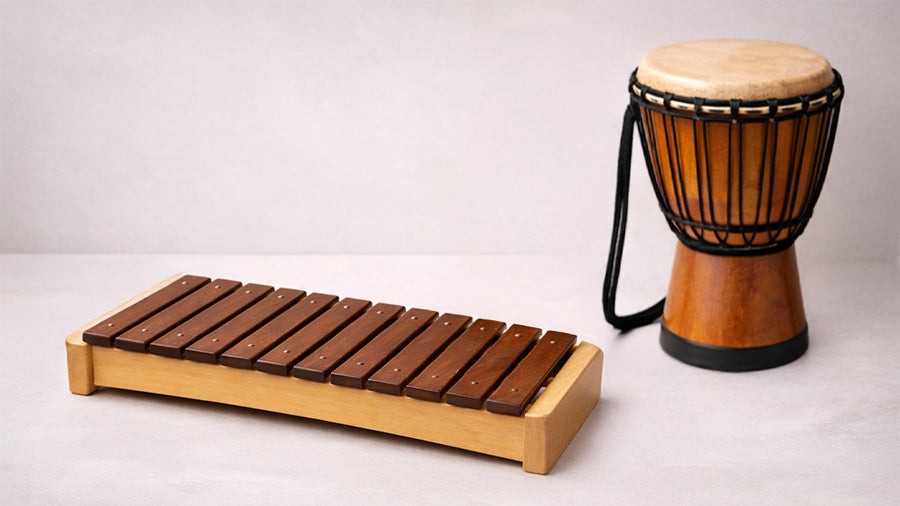
Examples include triangles, maracas, tone blocks, and hand drums. A triangle is made from metal, which allows it to ring for a long time when struck. Maracas are played by shaking and create rhythm through movement rather than striking. Tone blocks are carved from wood with a hollow centre, producing a solid, woody sound when tapped with a mallet. Hand drums use a stretched skin head, allowing players to tap, rub, or strike the surface in different ways to change the sound.
Unpitched percussion instruments are used widely in orchestras, classrooms, folk music, and modern rhythm sections. They add texture, colour, and pulse rather than melody.
What is pitched percussion?
Pitched percussion instruments produce clear musical notes that can move higher or lower in pitch. These instruments can play melodies, scales, and simple tunes while still being played by striking.
A glockenspiel is a common example of pitched percussion. It is made from metal bars arranged by pitch, with longer bars producing lower notes and shorter bars producing higher notes. The bars are typically laid out from left (low) to right (high), allowing players to move up and down the pitches in order. Glockenspiels are played using mallets, not fingers, so the bars can resonate freely.
A xylophone is another pitched percussion instrument, similar in layout but made from wood rather than metal. This difference in material changes the timbre, giving the xylophone a warmer, more earthy sound compared to the bright, ringing tone of a glockenspiel. Both instruments allow players to perform melodies, patterns, and musical phrases, not just rhythms.
Why material matters in percussion instruments
The material an instrument is made from has a direct impact on its sound. Metal instruments tend to ring longer and sound brighter. Wooden instruments produce warmer, shorter tones. Skin instruments, such as hand drums, offer a wide range of textures depending on how and where they are struck. These material differences are why percussion instruments can sound so varied, even when played in similar ways. Across cultures, people have used what was available around them to create percussion instruments, which is why percussion is so diverse worldwide.
Why both pitched and unpitched percussion matter
Unpitched percussion provides rhythm, pulse, and structure. Pitched percussion adds melody, harmony, and musical direction. Together, they form the foundation of many musical styles, from orchestral and folk music to modern classrooms and ensembles. Understanding the difference helps musicians choose the right instrument for the role they want to play.
Where to buy Musical Instruments?

Musical instruments are one of the most rewarding ways to experience music because you can start creating sound almost instantly. Our collection features instruments from around the world, crafted from natural materials like wood, bamboo, gourds, metal, and skin, chosen for their sound, character, and playability. Many are easy to begin with yet offer endless room for creativity as your skills grow, making them ideal for beginners, teachers, musicians, classrooms, and home music-making.


