
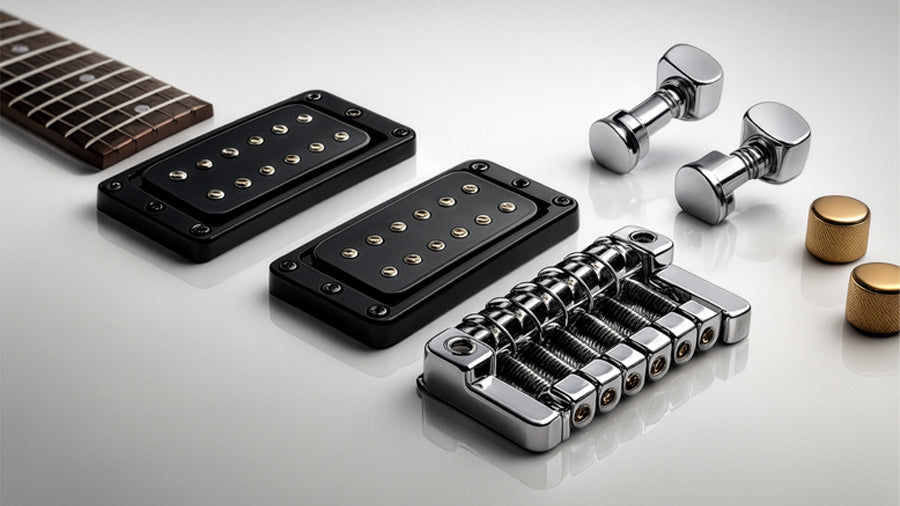
Have you ever listened to a song and heard the guitar sound brighter, softer, or grumpier than you realized it was? The secret is that a massive portion of that distinct personality comes not just from the player, the amp, or the plugins, but from something most listeners overlook: the hardware of the guitar.
The dozens of minute metal elements—including bridges, tuners, Guitar nuts, frets, pickups, guitar knobs, and even screws—work silently behind smooth solos and chunky rhythms. While they are not the headliners, these parts fundamentally determine the sound that comes off your monitors. Join us as we explore how these crucial components get into the music we hear.
The Importance of Hardware
Imagine two guitars that look identical but sound vastly different—one vibrant, the other dead—even with the same amps and strings. The secret lies in the guitar hardware, which acts as the backbone of sound.
It silently dictates string vibration, note duration, tuning stability, and overall body resonance. Producers and studio engineers know this fundamental truth: these behind-the-scenes components are vital. From a tiny saddle adjustment to the choice of the bridge, these elements determine how a guitar truly performs and fits into a professional mix.
Different Types of Guitar Bridge
The guitar bridge acts as the instrument's ground control, absorbing string vibrations and transmitting them to the body—a function vital for determining sustain and stability. Fixed bridges (like Tune-o-matics) maximize sustain and stability, delivering a grounded, confident tone ideal for rock leads and are easiest to record due to their minimal pitch changes.
A tremolo bridge (like a Floyd Rose) sacrifices some sustain and offers a softer attack, but unlocks tremendous expression through pitch manipulation. A producer's choice between these bridge types is a crucial decision that defines a guitar's character and the exact effect required for a song.
How Guitar Pickups Work as Microphones
Though not mechanical hardware, pickups are the critical component that converts string vibration into the essential electrical signal—making them your guitar's microphones. Choosing the right pickup is often the very first tonal decision a producer makes. Single coils are clear, crisp, and airy, perfect for rhythmic clarity in pop, funk, and indie.
Humbuckers are the opposite: thicker, warmer, and louder, excelling in high-gain leads and heavier genres by cutting noise. P90s offer a raw, dirty character, sitting uniquely between the two. The choice of pickup fundamentally determines the attitude a guitar brings to a recorded track.
Why Tuners Are Essential for Recording
Good guitar tuners are the unrecognized stabilizers that save a recording session from the painful truth of pitch drift, a problem no plugin can fix. While often viewed as simple pegs, poor tuners can quickly ruin a tracked guitar figure. This is why locking tuners are essential and popular in the studio: they speed up string changes, reduce tuning slips, and keep the pitch steady even with heavy bending. Investing in quality tuners is key to ensuring stability and avoiding the nightmare of out-of-tune takes.
The Role of the Guitar Nut
Often the least recognized part, the guitar nut, seated against the headstock, is essential for regulating string tension, height, and tuning stability. While a cheap plastic nut can cause annoying 'ping' noises and poor tuning when bending, upgrading to a well-cut bone, Tusq, or brass nut allows strings to slide easily.
This results in better tuning stability, more consistent tone, and clean open chords—crucial factors during studio takes. Producers often run a quick "nut check" on a misbehaving guitar because this small strip is frequently the culprit behind frustrating pitch issues.
How Fret Size Affects Tone
Frets are not merely guides for your fingers; they actively determine a notes tone, sustain, and feel. Jumbo frets are larger more bendable and are ideal for expressive leads. Vintage frets are smaller offering a warmer tone that is perfect for rhythm tracks and control.
Stainless steel frets are highly durable and impart a glassy, bright sound—a choice popular in studios. While casual listeners may not notice the difference, a guitarist feels the impact immediately and this difference is clearly reflected in the final recording.
The Tonal Impact of Guitar Alloys
Do screws and metal alloys really influence tone? Ask any luthier, and they will explain how materials like steel, brass, zinc, and titanium each vibrate differently. A titanium bridge saddle can illuminate the sound, brass adds warmth, and steel heightens attack—a pinch of the right metal is the seasoning that gives a dish its flavor.
Ultimately, guitar hardware, though lacking glamour, significantly dictates the sound of recorded music. Bridges govern sustain, pickups sculpt character, and nuts and tuners ensure stability. Behind every polished guitar track is a complete ecosystem of these small, deliberate choices that cumulatively shape the final tone.
Ready to Go from hardware to Playing?

Now that you understand the complex role of guitar hardware. Now you can turn that knowledge into practical skill. Our Complete Guitar Player eBook is made up of two parts: essential basics (diagrams, tuning guides, tips) and the ultimate practical section. You will learn how to play and discover 20 songs suitable for both beginners and advanced players, alongside foundational music theory and dedicated practice pages to build your confidence.


