YouTube can help musicians reach new listeners, share their creative process and build an audience beyond individual releases. This guide covers practical ways to plan videos, improve discoverability, understand YouTube monetisation requirements and use performance data to grow your channel.
Build a YouTube Channel Around Your Music
Start with a clear audience: the listeners who enjoy your genre, instruments and style. Make your channel name, description and artwork recognisable, then organise uploads into playlists for music videos, live performances, tutorials and behind-the-scenes content. Choose a manageable publishing schedule you can maintain. A useful video that answers a real audience need is worth more than a rushed upload made to hit an arbitrary target.
Plan Videos That Give People a Reason to Watch
Mix full songs and music videos with videos that reveal your creative process: how you wrote a chorus, recorded an instrument, built a beat or prepared a live performance. Give each upload one clear promise and deliver on it early. Use a brief demonstration, question or compelling moment as the opening rather than a long branded introduction. A series of related videos can encourage viewers to explore the channel after watching one.
Improve Titles, Thumbnails and YouTube Search
Write titles that accurately describe the music or the benefit of watching, using phrases people might search for when they fit naturally. For a release, include the artist and song name; for a tutorial, identify the skill or instrument. Create readable thumbnails with a clear subject and strong contrast. Use descriptions for credits, chapters, relevant links and context. Tags can help with misspellings, but titles, thumbnails, viewer satisfaction and the video itself matter much more than stuffing keywords into tags.
Use Shorts, Playlists and Collaborations
Turn a song, performance or longer tutorial into a few genuinely different Shorts: a striking hook, a quick technique demonstration or a behind-the-scenes moment. Give each clip a satisfying beginning and ending, and direct interested viewers to a related full video where appropriate. Group connected uploads into playlists and collaborate with musicians whose audiences may enjoy your work. Share videos on your website and active social channels, but avoid posting the same promotional message everywhere without adapting it.
Learn from YouTube Analytics
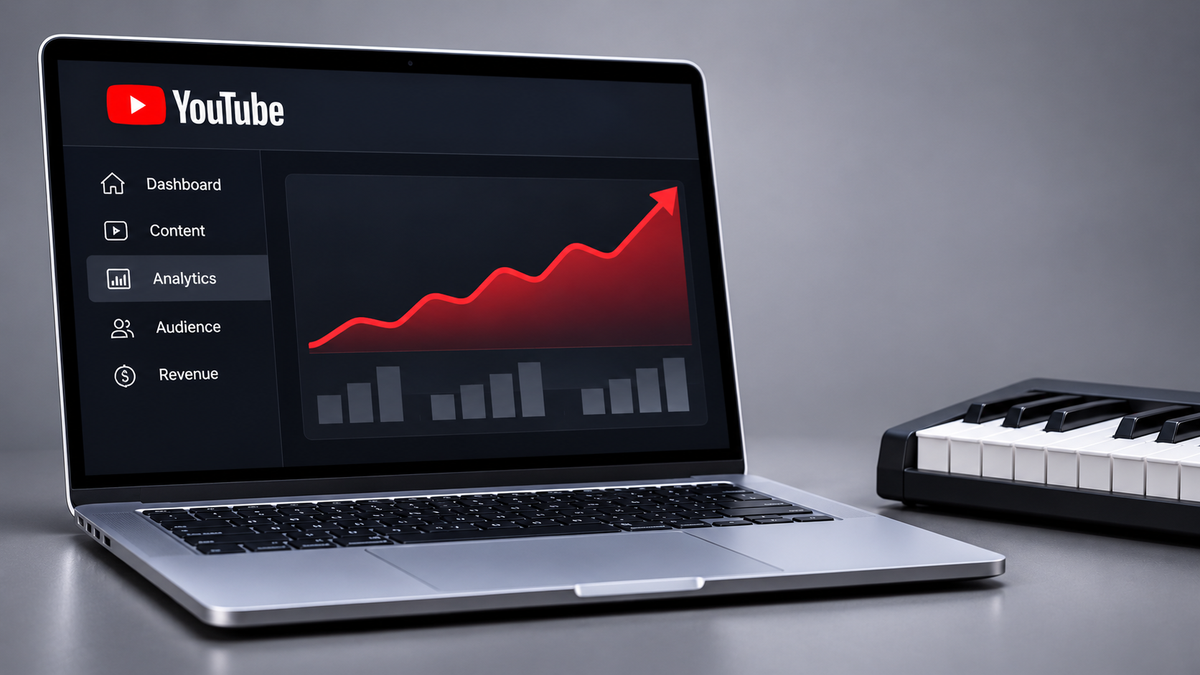
Use YouTube Studio to compare impressions, click-through rate, audience retention, watch time, traffic sources and subscribers gained by video. If a video receives impressions but few clicks, examine its title and thumbnail. If viewers leave immediately, revisit the opening and whether the video delivers what the packaging promises. Look for patterns across several uploads rather than drawing conclusions from one small sample. Repeat successful subjects and formats while improving one part of the process at a time.
How to Monetise Your Music YouTube Channel
YouTube advertising revenue can provide an additional income stream to help fund recording equipment, music videos and future releases. Under the current YouTube Partner Programme advertising requirements, channels need 1,000 subscribers alongside either 4,000 valid public watch hours in the past 12 months or 10 million valid public Shorts views in the past 90 days. Meeting the numbers does not guarantee approval: YouTube also reviews channels against its monetisation policies and other eligibility requirements. Some fan-funding features may be available at lower thresholds. Check the official YouTube Partner Programme requirements for the latest rules, and focus on building an engaged audience rather than chasing subscriber counts alone.
Make Filming and Editing Sustainable
You can begin with a modern phone, stable framing, good light and clear audio. Musicians should pay particular attention to recording quality: check for distortion, background noise and inconsistent volume. Edit out unnecessary pauses, show useful close-ups and add captions when they improve accessibility. You do not need elaborate transitions, expensive cameras or a complicated colour-grading workflow to make a helpful video. Improve your equipment only when you can identify a specific limitation it would solve.
Promote Your Music Beyond YouTube

Give each release a simple promotion plan: prepare the full video, create a few short clips, update your artist website and share the song with communities likely to appreciate it. Collaborate where there is a genuine audience fit and respond to comments to learn what listeners value. If you are preparing a release, read Where to Distribute Your Music Video for the different platforms and delivery options. Build repeatable habits rather than chasing a single viral moment.
What We Learned Building a Music Channel
Our experience with Carved Culture has reinforced that growth takes experimentation and persistence. Early videos were inconsistent, and our scripted presentations sometimes felt stiff. Documenting the process more naturally helped us make content that was easier to sustain. The most useful lesson is to keep learning from each upload, focus on what viewers actually need and avoid confusing expensive production with valuable content.
Build Your Career as an Independent Artist

Growing your YouTube channel is one part of building a music career. Our forthcoming Become an Independent Artist eBook will guide you through developing your artist identity, planning releases, distributing your music and promoting it to the right audience. It brings the practical steps together so you can build a more sustainable approach to sharing your work.
Become an Independent Artist — Coming Soon