
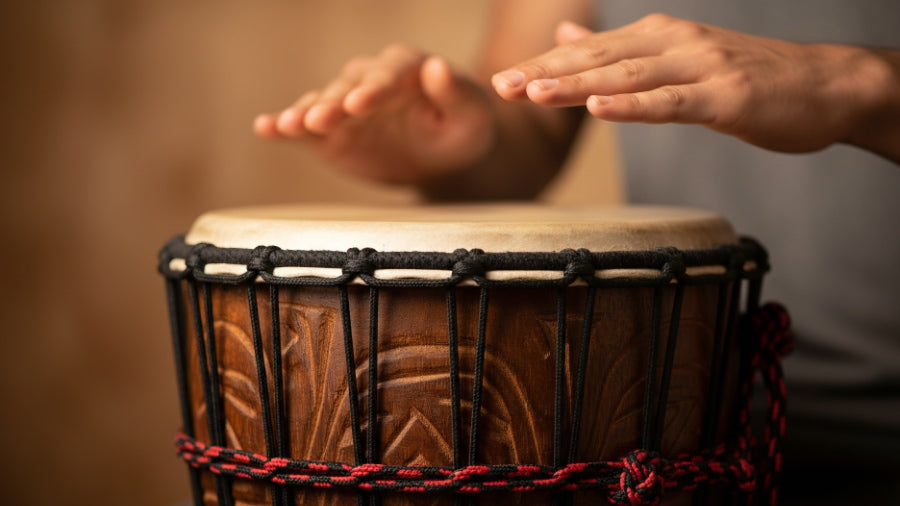
The slap is the Djembe's signature sound: a high-pitched, sharp, cutting tone that adds energy and dynamics to any rhythm. When played correctly, it contrasts powerfully with the deep bass and the clear tone. If your slap sounds flat, muffled, or too much like your regular tone, the problem isn't your drum—it's a minor technique adjustment that, once fixed, will immediately sharpen your sound. Mastery of the slap is essential, but it demands speed, precision, and zero tension.
Mastering the Motion
The perfect Slap relies on quick, loose movement and minimal hand contact with the drumhead, as the difference between a clean slap and a weak thud comes down to where you strike and how quickly you leave the skin. Play the Slap near the edge of the rim, keeping your fingers relaxed and slightly spread on impact. Use a snapping motion, striking quickly and releasing your hand immediately, which prevents muffling and lets the high-pitched sound ring out sharply.
Troubleshooting the Common Flaws
If you’re struggling to produce that sharp, cutting sound, one of three common beginner errors is likely the cause. First, “Slap and Tone Sound the Same” happens when your hand angle or rigidity is off—lift your hand slightly toward the ceiling and let your fingers relax and bounce naturally for slaps, while keeping your hand firm and fingers together for clear tones. Second, muffled or weak sounds occur when you leave your hand resting on the drumhead or press into it after striking; the key is to strike cleanly and let your hand rebound naturally, avoiding any pressure that chokes the note. Finally, hand pain or tension can weaken your slap—if your hands feel sore or tight, you’re likely hitting too hard or gripping too tightly. Relax your hands and wrists, rely on technique rather than force for volume, and warm up with 30–60 seconds of wrist rolls before playing.
The Complete Djembe Drum Player

You have now mastered the most dynamic sound on the Djembe, but a single, sharp slap is only the beginning. True expressive drumming requires connecting that slap to the bass and tone with flawless timing, rhythm, and synchronization. Your new problem is turning these individual sounds into fluid, complex rhythms.
The Complete Djembe Drum Player eBook is the most valuable learning resource for this instrument. It provides the full, structured course you need for true mastery, including advanced techniques like muted strikes, accents, and flams. The book gives you essential rhythm exercises, full drum patterns, and troubleshooting guides to build the muscle memory and rhythmic flow needed to play like a professional.


