
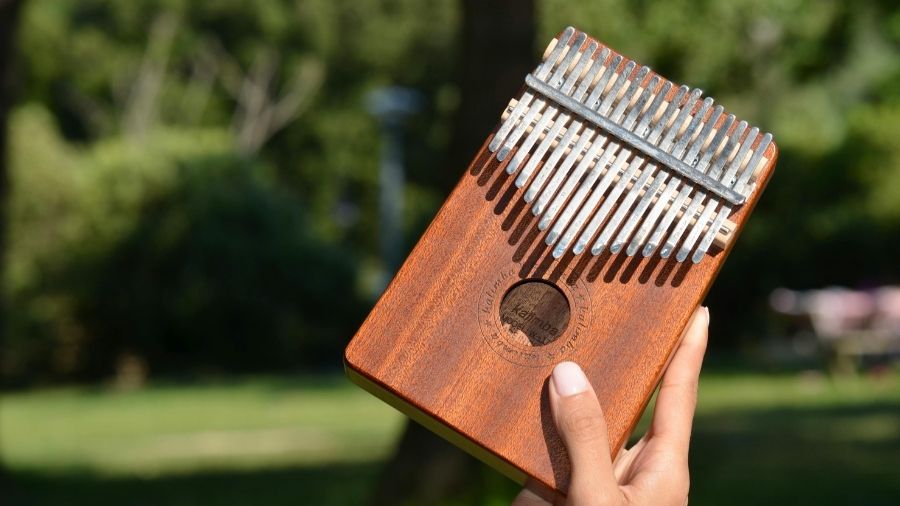
If your Kalimba sounds perfect one day and flat the next, the culprit is often your local forecast. As wooden, acoustic instruments, Kalimbas are extremely sensitive to changes in environment. Temperature and humidity fluctuations directly impact both the wooden body and the metal tines, leading to tuning instability, buzzing, and even structural damage like wood cracking. Understanding this relationship is the first step in proper maintenance. This guide breaks down the three primary environmental factors that compromise your Kalimba's tone and provides simple solutions to protect your instrument year-round.
Temperature Changes (Why Cold Weather Makes It Flat)
Temperature is a primary factor in tuning instability because metal and wood expand and contract at different rates. The most common scenario is the "flat notes in cold weather" problem. When the metal tines get cold, they contract, slightly reducing their tension and lowering their pitch (making them flat). Conversely, intense heat can cause the wooden body to dry out and shrink rapidly, which puts stress on the tines and can lead to minor structural shifts that throw the instrument out of tune entirely. The Fix: Always store your Kalimba at room temperature (around 20^\circ \text{C} or 68^\circ \text{F}). Never leave it in a cold car, near an open window, or next to a direct heat source.
Humidity Fluctuation (The Risk of Cracking and Buzzing)
Humidity—the amount of moisture in the air—is the biggest threat to the Kalimba's wooden body. High humidity causes the wood to swell, which can tighten the hold on the tines, sometimes raising the pitch and causing a dull sound. More dangerously, low humidity (dry air) causes the wood to shrink rapidly. This rapid shrinking is the leading cause of wood cracking (especially on the soundboard) and can also loosen the screws on the bridge bar, leading to persistent tine buzzing and rattling. The Fix: If you live in a dry climate, store your Kalimba in its case with a small, specialized musical instrument humidifier to maintain stable internal moisture.
Best Practices for Long-Term Protection
Protecting your Kalimba is simple but requires consistency. Your primary goal is to minimize shock and environmental swings. Never expose the instrument to direct sunlight for extended periods, as this causes rapid, uneven temperature changes. Always use a dedicated, padded travel case when transporting your Kalimba, even over short distances, as the case buffers against sudden environmental changes and physical knocks. Finally, the best way to monitor its health is to tune it frequently—checking the pitch acts as a warning system for any rapid environmental changes affecting the wood.
Environmental changes are inevitable, but a damaged, detuned Kalimba is not. Protecting your instrument from extreme swings in temperature and humidity is a simple form of maintenance that guarantees clear tone and preserves the beautiful integrity of the carved wood.
The Only Kalimba Guide You’ll Ever Need

While you've learned to protect the wood, you still need to learn the techniques of fine-tuning and structural repair. This guide contains advanced sections on troubleshooting structural problems caused by weather, tine alignment, and precise tuning adjustments.


