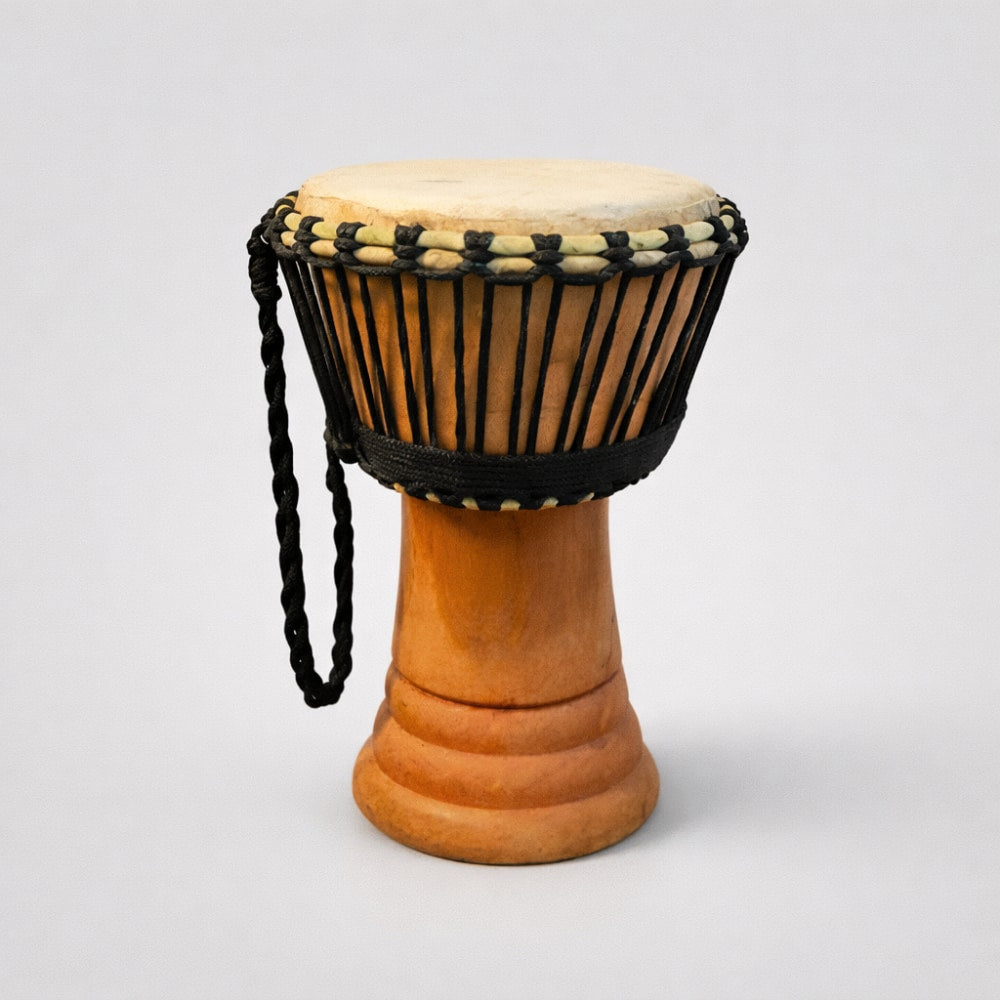
Learning to play the djembe starts with three core sounds: bass, tone and slap. In this guide, you’ll learn how to hold and position the drum correctly, produce each of these sounds, combine them into your first rhythms, adjust and care for your djembe, and avoid the most common beginner mistakes. By the end, you’ll have the fundamental techniques needed to start playing with better tone, timing and control.
Holding the Djembe

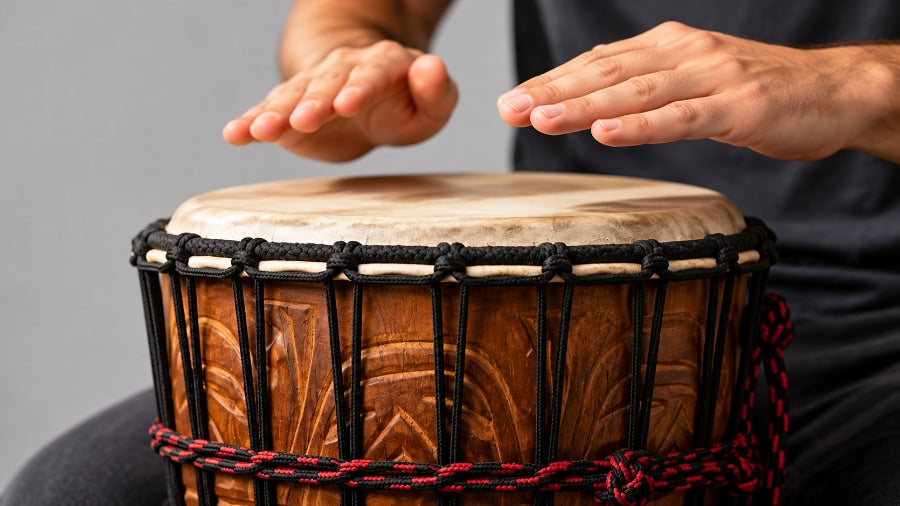
Sit upright with the djembe held securely between your knees and tilted slightly forward. Keep your back straight, shoulders relaxed and elbows slightly above the drumhead so your hands can move freely. Strike from relaxed wrists and allow your hands to rebound naturally after each hit rather than resting on the drumhead, which can mute the sound. If standing, use a drum strap to hold the drum and play however is comfortable.
Bass, Tone and the Slap

The bass is the djembe’s lowest, deepest sound. Strike the centre of the drumhead with a full, relaxed palm, then let your hand rebound naturally to produce a deep, round tone. The tone is a clear, mid-pitched sound played near the edge of the drumhead. Keep your fingers together and firm, then strike and rebound cleanly to let the note resonate. The slap is the djembe’s highest, sharpest sound. Strike near the edge with a quick, loose motion, keeping your fingers relaxed and slightly spread, then rebound immediately. Speed and relaxation—not force—create a crisp, cutting slap.
5 Easy Djembe Rhythms for Every Beginner

Learning a few core djembe rhythms builds coordination, timing, and confidence faster than jumping between complex patterns. These beginner rhythms focus on the three djembe sounds and teach you how rhythm feels in your hands before worrying about speed or complexity. Below are five simple rhythms every new player should learn first.
Rhythm 1 – Your First Djembe Beat
Play Bass – Bass – Bass – Bass, alternating Right – Left – Right – Left. Repeat continuously, keeping each stroke evenly spaced and your hands relaxed. Focus on producing a consistent, deep bass sound with every hit.
Rhythm 2 – Bass–Tone Alternation
Play Bass – Tone – Bass – Tone, alternating Right – Left – Right – Left, then repeat. Keep each stroke evenly spaced and focus on a clear difference between the bass and tone. Once the pattern feels consistent, gradually increase the tempo. A steady groove often supports music better than a complicated pattern, making this simple beat useful for both practice and playing with other musicians.
Rhythm 3 – Introduce the Slap
Play Bass – Tone – Slap – Tone, alternating Right – Left – Right – Left. Repeat continuously, keeping the rhythm steady and focusing on making the slap sound crisp and clearly different from the tone. If you have a metronome, once you’re comfortable, gradually increase the tempo from 60 BPM to 140 BPM so that the pattern becomes more musical.
Rhythm 4 – Call and Response
Play Bass – Tone – Bass – Tone as the call, followed by Tone – Slap – Tone – Slap as the response, alternating Right – Left – Right – Left throughout. Repeat both phrases continuously, listening to how the contrasting patterns create a musical question and answer while developing your control of all three djembe sounds.
Rhythm 5 – 8-Beat Groove
Play Slap – Slap – Bass – Bass – Tone – Tone – Bass – Bass, alternating Right – Left throughout. Repeat the eight-beat pattern continuously, focusing on keeping each pair of sounds consistent and the rhythm steady. Once it feels comfortable, gradually increase the tempo and enjoy how the simple pattern develops into a fuller groove.
Djembe Tilt
Tilting the djembe slightly forward allows air to escape from the bottom of the drum, helping the bass sound deeper and more resonant. There is no correct angle; while playing bass strokes, gradually tilt the drum until the bass becomes fuller and more open, then stop. The drum should remain comfortable and stable between your legs—if it feels difficult to control or creates tension in your legs and hips, it is tilted too far. The goal is simply maximum resonance with minimum effort.
Adjust Your Djembe
A djembe is adjusted through its rope-tensioning system. Tightening the ropes increases drumhead tension and raises the pitch, while reducing tension lowers it. Make small, even adjustments around the drum rather than heavily tightening one area, which can stress the skin and ropes. If the drum sounds dull, loses clarity or the head feels soft, it may need adjusting, particularly after regular playing or changes in humidity.
Caring for Your Djembe

Natural drum skins are sensitive to sudden changes in temperature and tension, so avoid aggressive tuning when the drum is cold or very dry. Keep your djembe away from heaters, prolonged direct sunlight and damp conditions, and store it somewhere dry with a stable temperature. Wipe away dirt and moisture after use and use a protective case when transporting it.
Common Beginner Mistakes
Avoid rushing your rhythms, using excessive force or relying too heavily on slaps. Focus on clean technique before increasing speed, keep your hands and wrists relaxed, and balance bass, tone and slap to create space, contrast and groove.
Take Your Djembe Playing Further

You now have the foundations to start playing the djembe, from holding the drum and producing bass, tone and slap to keeping time and playing your first rhythms. The next step is developing those fundamentals through structured practice and progressing to longer patterns, better coordination and more advanced rhythms. The Complete Djembe Drum Player gives you a clear path forward with step-by-step lessons, diagrams, tuning guidance, structured practice sessions and progressive exercises designed to develop your technique, timing and control.