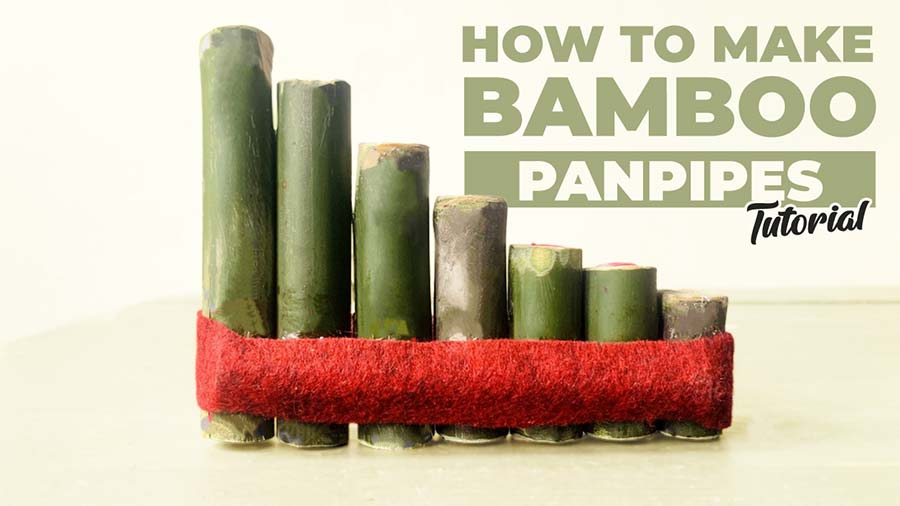
In this blog post tutorial, you will discover how to make bamboo panpipes. This easy-to-follow guide provides step-by-step instructions to craft your own panpipes, letting you enjoy their soothing melodies while focusing on your breath in a fun and rewarding project.
How to make bamboo panpipes video
Materials Needed
Step 1: Measuring and Marking
Start by measuring the bamboo cane using a ruler. Mark the lengths for each pipe with a pencil. The measurements from longest to shortest are as follows: 4.5 inches, 4 inches, 3.5 inches, 3 inches, 2.5 inches, 2 inches, and 1.5 inches.
Step 2: Cutting the Pipes
To ensure a good sound from your panpipes, it's important to cut next to a node ridge so that one side remains sealed. Use a handsaw to cut out all of the pipes according to the marked lengths.
Step 3: Sanding the Pipes
After cutting the pipes, grab some sandpaper and carefully sand around the edges of each bamboo pipe. This will remove any sharp edges and make them smooth.
Step 4: Sealing the Pipes
Inspect the pipes and check if any of them are not completely sealed. If you find any openings, you can seal them with modeling clay. This step is crucial for achieving the desired sound quality.
Step 5: Organizing and Straightening the Pipes
Organize the pipes from smallest to largest and use a ruler to straighten them. This will ensure that the panpipes are aligned properly for optimal sound production.
Step 6: Attaching the Pipes
Using superglue, attach each pipe to the other. Apply a small amount of glue to the ends of the pipes and carefully connect them together. To add stability and decoration, you can also attach a cut strip of bamboo to the off pipes using a glue gun.
Step 7: Decorating the Panpipes
Once the glue has dried, it's time to add some personal style to your panpipes. You can decorate them with materials like wool craft felt, ribbon, or a cotton woven band. Choose the material that resonates with your style and preferences. Apply glue around the panpipes and stick the fabric onto them. Be creative and experiment with different patterns and colours to make your panpipes unique.
Step 8: Enjoying the Melody
Congratulations! Your bamboo panpipes are now ready to play. Hold them up to your mouth and blow across the top ends to produce a beautiful pan flute sound. Experiment with different techniques and melodies to create soothing tunes.
Where to buy panpipes?
★★★★★ - " Thank you. Beautiful instrument, carefully packaged and sent quickly". - Verified Buyer
If crafting your own bamboo panpipes isn’t in the cards for you, don’t worry—we’ve got you covered! Our collection of traditional bamboo panpipes from South America delivers both authentic sound and aesthetic appeal. Whether you’re a beginner or professional musician, you can start your musical journey today with one of our beautiful Peruvian panpipes.
Purchase Your Traditional Peruvian Panpipes Here
Start Playing the Panpipes Today

Whether you crafted your own panpipes or purchased a traditional set, the next step is learning to play confidently. The Complete Panpipes Player by Ryan Bomzer is a step-by-step guide with 20 fully notated melodies, clear diagrams, tuning tips, and techniques—perfect for beginners or anyone looking to refine their skills.