
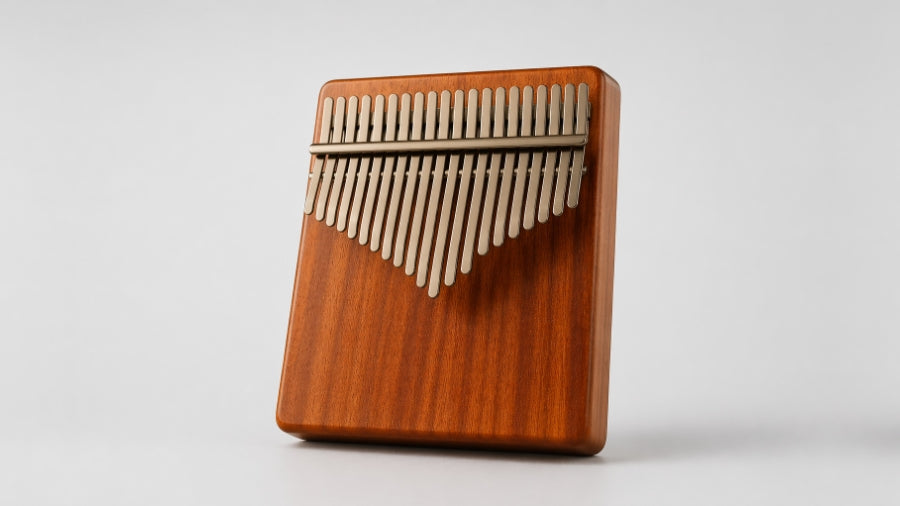
Yes — a 21-key kalimba is worth buying if you want more tonal range, potential, and room to grow beyond beginner songs. However, it does come with trade-offs, particularly around tabs availability and price. The right choice depends on whether you want simplicity or expanded musical freedom.
The 21-Key Kalimba Tab Problem
The main concern when buying a 21-key kalimba is tab availability, as most online kalimba tabs are written for 17-key models, the global standard that balances range and simplicity. Dedicated 21-key tabs are less common, so if you rely strictly on tabs, ready-made resources may be fewer—but this is not a dealbreaker.
A 21-key kalimba simply extends the range by adding four extra notes, typically in the lower or higher register, and 17-key tabs will still play correctly; you just won’t use the additional keys. The easiest solution is to use piano sheet music with letter notation—because the kalimba is tuned diatonically like a piano scale, you can follow letter notes instead of relying only on tabs, instantly unlocking thousands of songs beyond standard kalimba arrangements.
Greater Tonal Range
The main advantage of a 21-key kalimba is increased musical freedom and tonal range. With the extra keys, you can play songs that require a wider range, add deeper bass notes, create fuller arrangements, improvise more naturally, and avoid running out of notes mid-melody. Intermediate and professional players benefit most, as the extended layout supports richer harmonies and more dynamic compositions compared to a standard 17-key kalimba.
Is It Suitable for Beginners?
A 21-key kalimba is suitable for beginners, but with context. Although it may look intimidating, the layout remains intuitive, with notes arranged symmetrically from the centre outward and numbered tines that make basic melodies easy to follow, allowing beginners to start simple and gradually explore the outer keys as confidence grows. If you want the easiest possible learning curve, a 17-key model feels slightly less overwhelming but if you want an instrument you won’t outgrow, the 21-key version is the smarter long-term investment.
While it typically costs more, the added range often justifies the price—if you only plan to play nursery rhymes or simple melodies, 17 keys may be enough, but if you want to perform, compose, record, or explore advanced music, paying slightly more for four extra keys can prevent upgrading later and offers greater flexibility and growth potential.
Build Quality Matters
The 21-Note Hluru Kalimba is built from high-quality wood and features a unique large bottom sound hole for enhanced amplification. This box-type design produces a clear, resonant tone suitable for both personal practice and performance. It comes complete with a tuning hammer, note stickers, a booklet, and a protective case, making it ready to play straight out of the box. Having everything included removes uncertainty, especially for beginners who might otherwise need to purchase accessories separately.
Which Kalimba Should You Buy?

If you want a wider musical range, plan to improvise or compose, don’t want to upgrade later, are comfortable using piano letter notation, and want deeper bass notes with richer arrangements. Choose a 17-key model if you prefer maximum simplicity, rely strictly on standard kalimba tabs, or only plan to play basic melodies.
For most players,especially those who expect to progress. The 21-key offers greater musical freedom without making the instrument significantly harder to play; the only drawback is fewer dedicated tabs, which can be solved by using piano sheet music or adapting 17-key arrangements. If you want an instrument that grows with you rather than limiting you, a 21-key kalimba is a strong long-term choice.


