
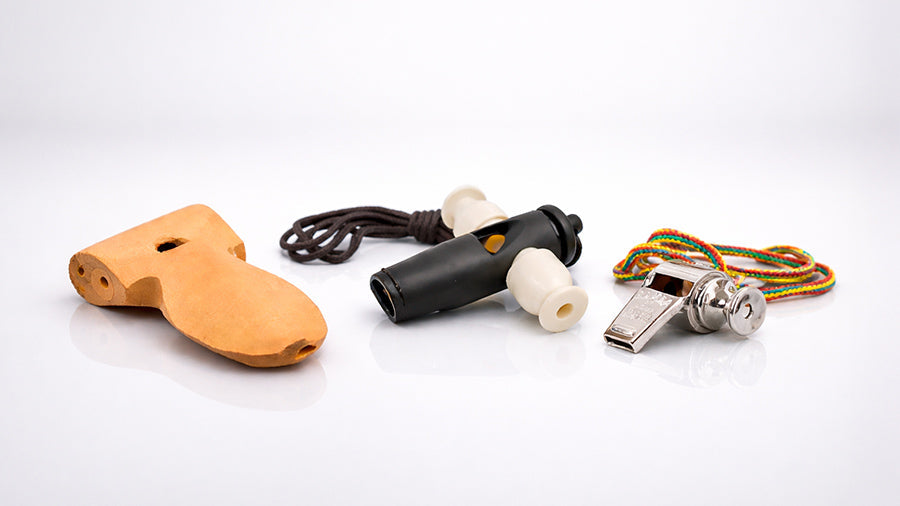
If you're looking for the best samba whistle for beginners, you're in the right place. A good beginner whistle should be easy to control, loud enough to cut through percussion and simple to learn, without unnecessary complexity. Samba whistles are high-pitched signalling instruments traditionally used in Brazilian samba to lead percussion groups, signal rhythm changes and energise performances.
Metal whistles tend to produce the brightest, most penetrating sound, while wood and plastic offer alternative tones and practical options for different players. Techniques such as the trill and triple whistle blast can be learned with practice, making the instrument useful for samba bands, drumming circles, performances and recordings. Below, you'll find our selection of samba whistles so you can choose the one that best suits your playing style and needs.
1. ACME Samba Whistle
The ACME Samba Whistle is one of the easiest options for beginners, producing a bright, sharp, high-pitched tone that cuts clearly through large samba drums, making it ideal for samba bands, festivals, and parades. With a single strong tone and simple breath control, it requires minimal technique to get started, while the attached ribbon makes it wearable and practical for performance. If you want a loud, durable, and straightforward samba whistle with a minimal learning curve, this is a strong first choice—view the ACME Samba Whistle here.
2. Apito Samba Whistle
The Apito Samba Whistle is the traditional Brazilian-style whistle used in Batucada and carnival performances, offering three distinct tones by covering and uncovering the side holes, making it more versatile than single-tone whistles while still beginner-friendly. Its wooden body produces a bright yet slightly warmer sound than metal, making it ideal for learning traditional samba signals and leading rhythm changes. If you want authentic Brazilian style with three-tone control, explore the Apito Samba Whistle here.
3. Tritone Samba Whistle
The Tritone Samba Whistle is lightweight, durable, and produces three clear tones, making it versatile enough for samba settings as well as sports and coaching. Its plastic construction makes it lighter and more weather-resistant than wood or metal, offering easy control and reliable performance at an accessible price point. While it lacks traditional aesthetics, it’s ideal for beginners who want low maintenance, affordability, and three-tone versatility—check out the Tritone Samba Whistle here.
Which Samba Whistle Should You Choose?

Choose metal if you want maximum volume and simplicity, wood (Apito) if you want traditional Brazilian sound with three-tone control, or plastic (Tritone) if you want lightweight durability, affordability, and versatile performance. All three samba whistles are beginner-friendly—the decision comes down to tone preference and how you plan to use it, whether for casual play, leading structured samba rhythms, or high-energy festival settings.


