
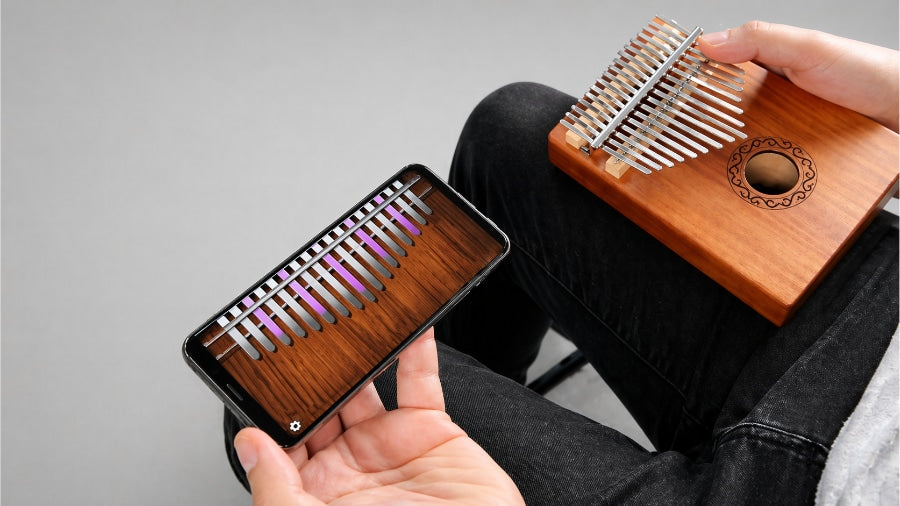
The Kalimba—known globally as the thumb piano and historically as the Sanza or Mbira in Africa where it originated—is famous for its soothing, bright, and metallic tone. If you are researching this instrument, you’ve likely found an incredible free tool: the virtual online Kalimba.
This tool is an excellent gateway, allowing you to sample the instrument’s authentic, recorded sounds and practice melodies instantly. However, while the virtual Kalimba is a perfect test drive, it is intentionally limited. This guide compares the digital experience with the physical instrument, revealing why the real tone, feel, and technique are the necessary next step for any serious player.
The Virtual Advantage
The virtual Kalimba serves a high-value purpose for curious beginners and experienced musicians. Since the online tool uses real recorded samples from our handmade Kalimbas, you experience an authentic sound instantly, without purchasing the instrument.
You can use the virtual tool to practice melodies, transcribe songs, and explore different relaxing tones. It's an ideal way to decide if the layout and sound are right for you before you commit. The major advantage is accessibility: you can practice the Kalimba online anytime, anywhere, with no apps or downloads needed.
The Real Difference
The jump from virtual to real Kalimba introduces three irreplaceable elements: Tone Decay, Technique, and Material Feel. The digital sound cannot replicate the complex decay time and vibrations you feel in your hands from a solid wood body, such as our Yulin or Magadi models.
More importantly, the virtual tool cannot teach you the smooth playing technique that is required to eliminate the common muffled or rattling sound. The real instrument provides the necessary tactile feedback that builds genuine skill and achieves the rich warm resonance that makes the Kalimba a unique meditative instrument.
Choosing Your First Real Kalimba

If you’re looking for a reliable kalimba that sounds right and feels easy to play, this 17-note Yulin kalimba is a great place to start. It’s designed with a clear consistent tone and smooth responsive keys so each note sounds clean and balanced. The full 17-note range gives you enough notes to play real songs properly, not just simple tunes, while the solid wooden body adds warmth and depth to the sound. It’s a simple, well-made instrument that feels good in your hands and makes playing enjoyable from the beginning.


