
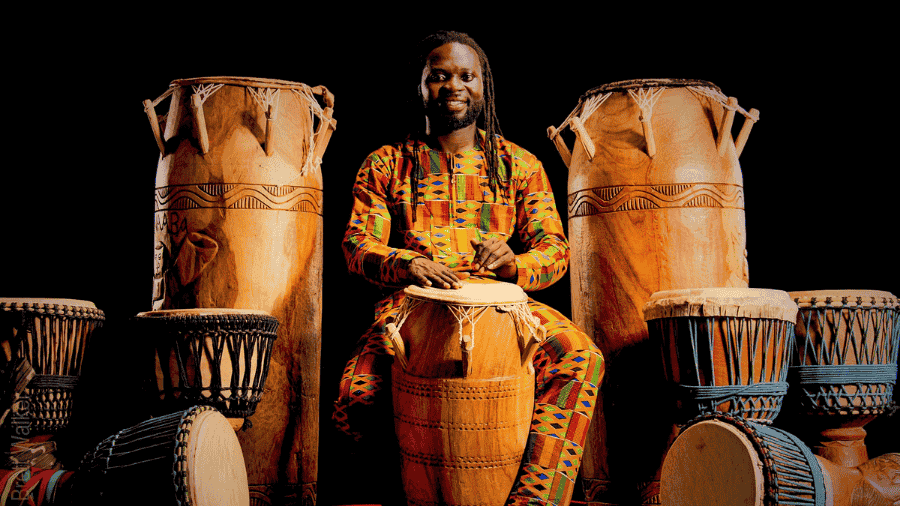
The Kpanlogo drum is a vibrant, melodic percussion instrument that holds a specific and relatively recent place in the rich musical history of West Africa. Unlike the ancient Djembe, the Kpanlogo emerged around the 1950s in Ghana, specifically within the Ga people of Accra. It quickly became known as the "drum of the youth," forming the rhythmic core of the popular Kpanlogo dance and music style. This music was often used for social and political commentary, making the Kpanlogo not just an instrument, but a symbol of modern Ghanaian cultural expression and rhythmic innovation.
The History of the Kpanlogo Drum
The Kpanlogo's uniqueness stems directly from its cultural origin and construction. The drum is typically handcrafted from solid wood, often shaped like a goblet (similar to a Djembe but more cylindrical), and features a drumhead made from animal hide, such as goatskin or cow skin. The construction process is meticulous and skilled, often involving intricate tribal decorations carved into the wood. The Small Kpanlogo drum, for instance, is a traditional instrument handcrafted from goatskin and wood, embodying the unique, one-of-a-kind nature of African percussion. This commitment to traditional, hand-finished craftsmanship makes these drums valuable pieces of cultural art.
The Kpanlogo Drums Tonal Sound
What makes the Kpanlogo distinct is its high-pitched, bright tone, which cuts through the ensemble and provides a syncopated, melodic rhythm rather than a heavy bass foundation. Because the instrument is tuned with ropes and pegs, it is capable of achieving a clearer, sharper, and more melodic sound than drums tuned with simple tension rings. This bright, articulate tone is essential for the fast, complex rhythms of the Kpanlogo dance. The Large Kpanlogo Drum offers this authentic, resonant tone with clarity demonstrating the superior craftsmanship required to handle the tension of the cow skin head and the premium wooden construction.
Handmade Quality vs. Mass Market
The distinction between a handcrafted Kpanlogo and a generic, mass-produced instrument is vast, resting primarily on authenticity and resonant quality. The unique value of a handmade drum is that it is a piece of cultural history, producing an organic sound profile that synthetic materials cannot match. While these unique instruments are inherently quite expensive due to the time and skill involved and are often limited in number, this quality ensures enduring value. Conversely, mass-market drums offer low cost and high availability but lack the complex tone and cultural narrative of authentic percussion. We encourage our audience to seek out drums that are pieces of art and culture, as they hold enduring value and offer an authentic connection to the rhythmic traditions they represent.
Explore Drums from around the world

The story of the Kpanlogo is a powerful reminder that every drum has a history, a culture, and a unique sound waiting to be discovered. Whether you are drawn to the syncopated youth of the Kpanlogo or the deep bass of the Djembe, there is a rhythmic tradition waiting for you.
We curate the best percussion instruments from around the world, including traditional African Djembes, Indian Dholak and Madal drums, and other unique rhythmic tools. Explore our collection to find a drum that connects you to these rich cultural traditions.


