A rainstick sounds like rain falling, and nothing else in percussion does that. This guide covers how it works, what the different types sound like, how long the sound lasts at each size, and how to play one properly.
What Is a Rainstick?
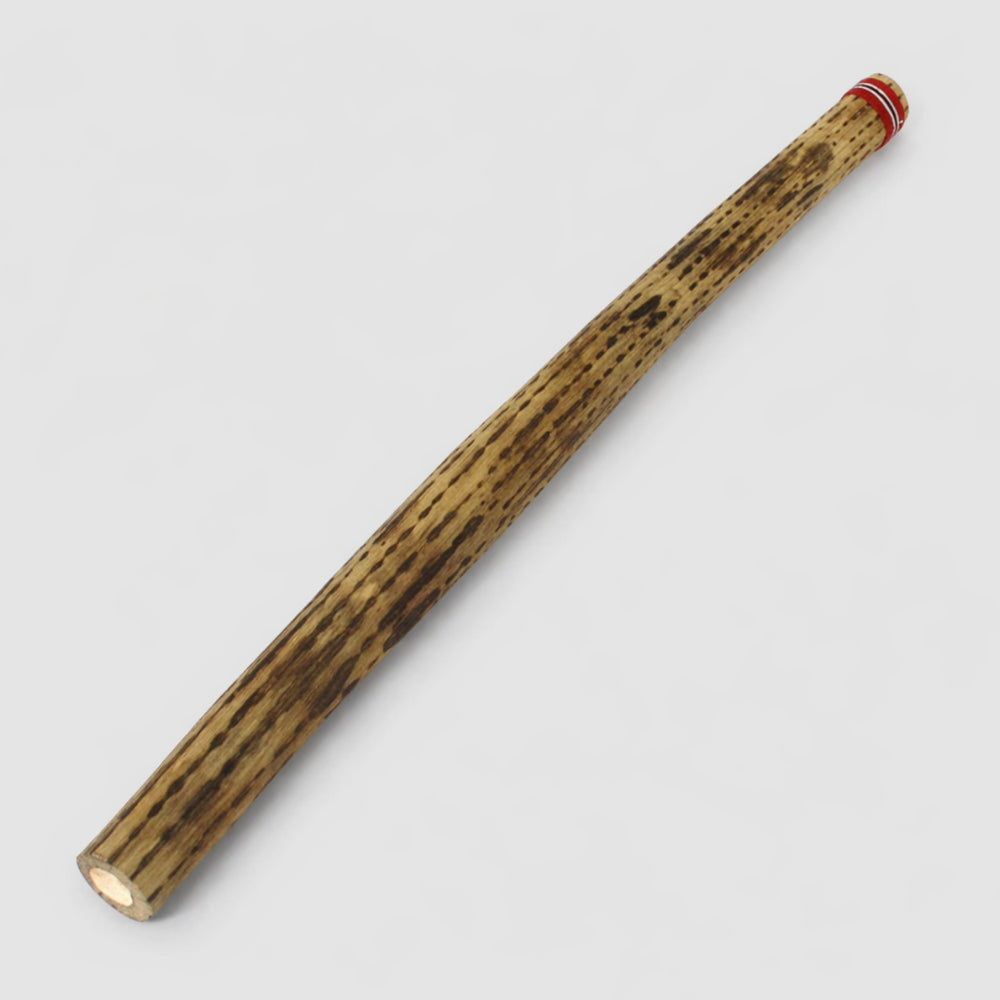
A rainstick is a long hollow tube with spikes set through it and small stones, seeds or grit inside. Tip it over and the filling falls past the spikes, which is what makes the rain sound. Traditional ones are made from dried cactus, with the plant's own thorns pushed inward. Modern ones use bamboo or wood. The instrument originated in Chile, where farmers used it hoping to bring rain for their crops. Today it is made all over the world and is used mostly for sound healing, meditation and mindfulness, along with ambient, world and film music, because the sound is genuinely relaxing.
What Does a Rainstick Sound Like?
A steady cascade soft at the edges with individual grains audible as they drop. This is a cactus rainstick:
It is a gentle instrument. The sound is soft and steady rather than sharp, and you control the volume with how fast you tilt it, so it is fine in a flat or a shared space. It also blends rather than dominates, sitting underneath melody and rhythm instead of competing with them, which is why it works in group playing and sound therapy sessions.
Different Types of Rainsticks

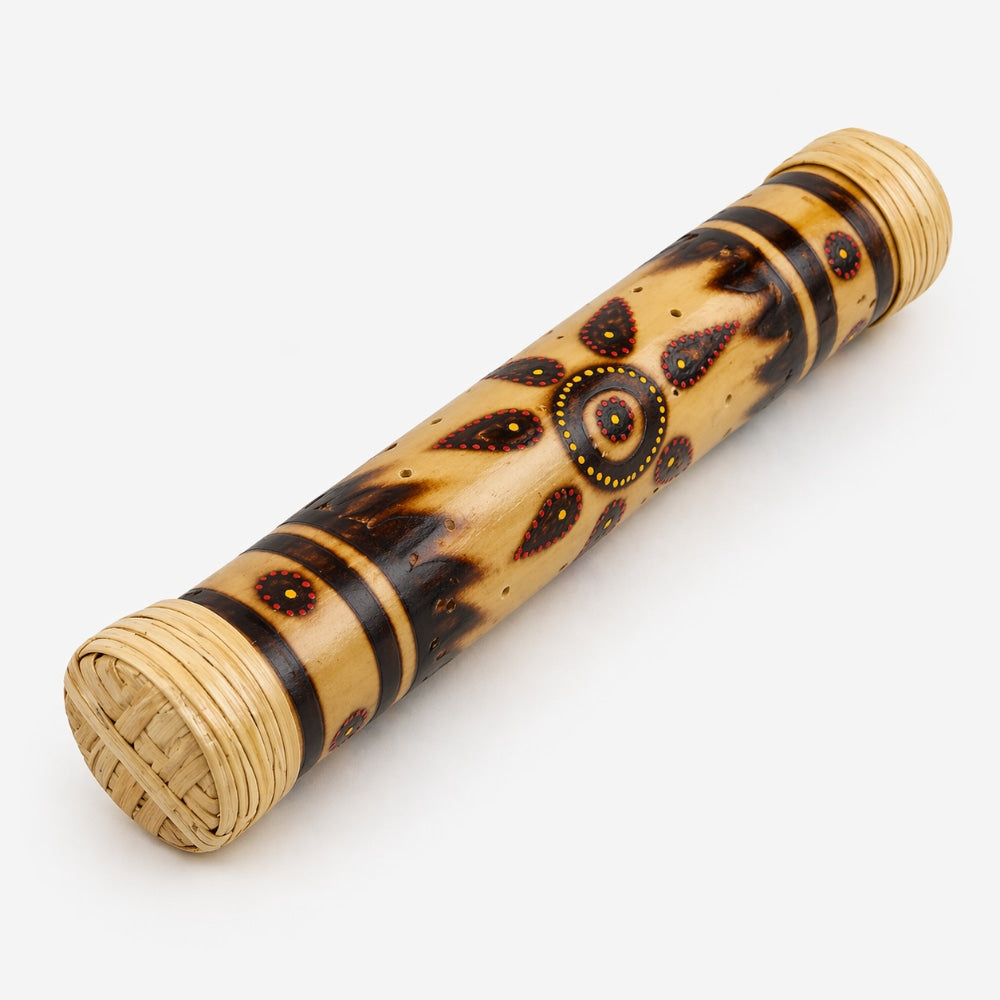
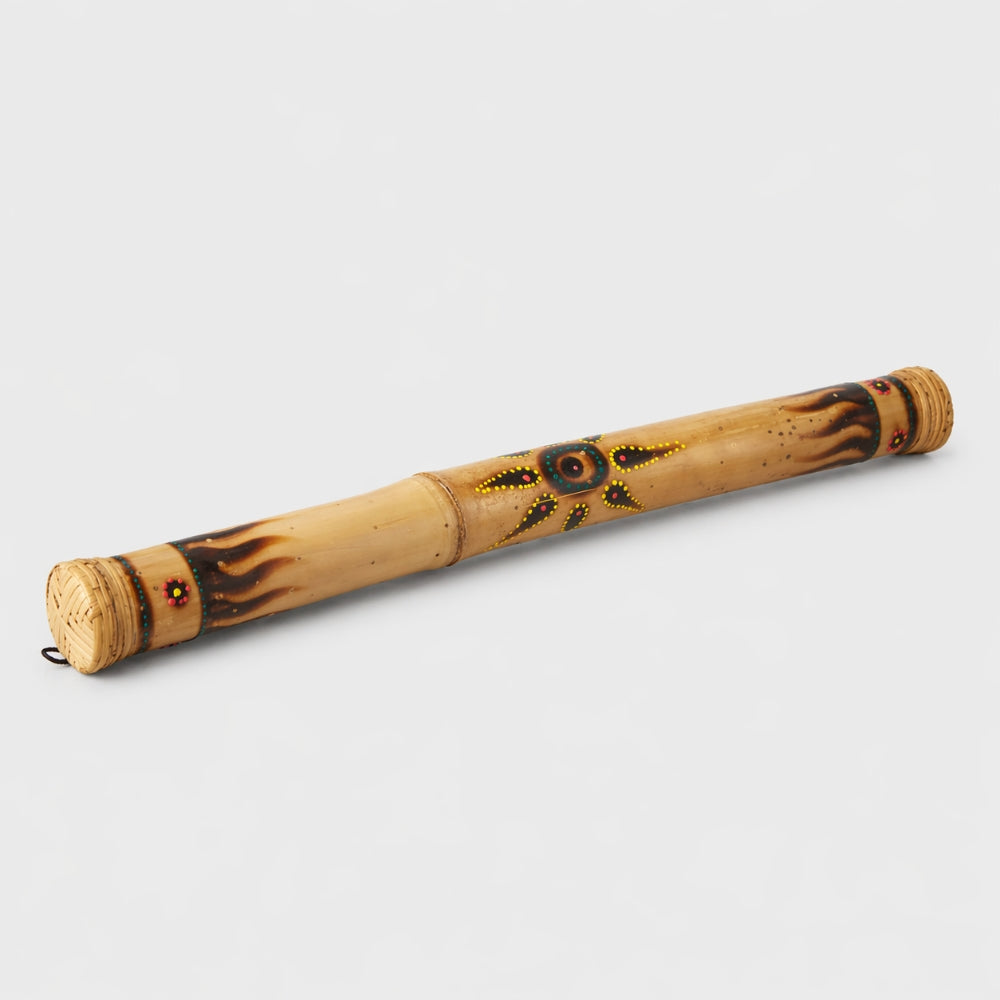
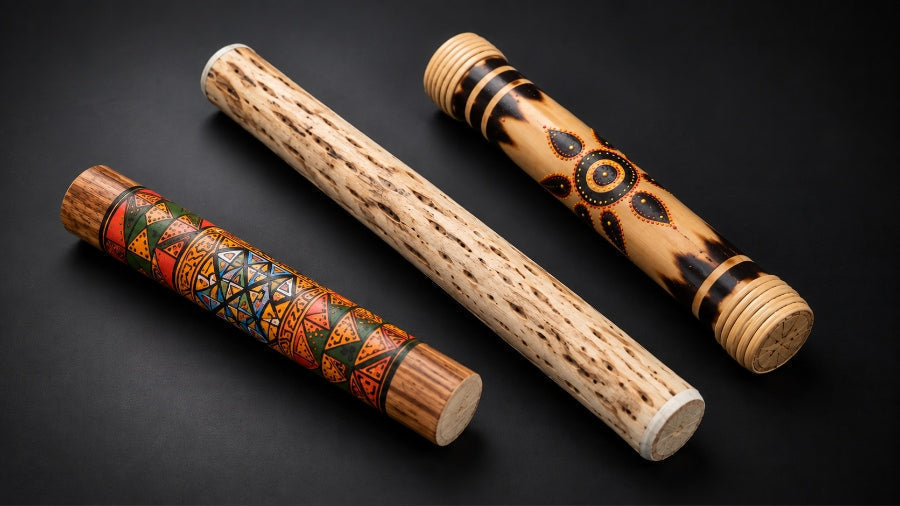
The material changes the tone. Cactus is the traditional one, earthy and natural, closest to real rainfall. Bamboo is lighter and crisper, and usually hand-painted. Wood is warmer and denser. Length matters too: longer rainsticks give a slow, sustained fall, shorter ones a quicker, sharper effect.
How Long Does a Rainstick Sound Last?
Length has the biggest effect, the longer the tube, the further the filling has to travel, and the longer the sound runs. Here is roughly what to expect at each size.
[[RAINSTICK_SLIDER]]
These are our own timings, taken as a guide rather than a laboratory test. Angle changes the result as much as length does. Tip one straight up and the sound is over quickly. Hold it diagonally and it runs far longer. Small rainsticks are compact, easier to handle and work better as a shaker, which makes them a good starting point. Larger ones are louder and sustain much longer. That long, even texture is also what makes them good for recording, sitting well in a mix for ambient tracks, sound design and meditation audio.
Where to Buy a Rainstick

Our rainsticks are handcrafted from cactus, bamboo and wood, in sizes from short and percussive to long and slow. Each one is chosen for sound quality and craftsmanship, and many are fair-trade and hand-painted, sourced from Peru, Indonesia and Bali. See every size and material in one place, with sound samples, so you can compare before you buy.
How to Play a Rainstick
Do not tip it fully vertical. The filling drops straight through and the sound is gone in seconds. Hold it diagonally instead, and as the sound falls, slowly rotate the stick. That keeps the filling moving through the spikes and stretches the sound out for much longer. It is the single biggest difference between a rainstick that sounds brief and one that sounds like real rain.
From there, the tilt angle controls the speed: a slight tilt gives slow, steady rainfall for meditation and relaxation, a steeper one speeds it up. You can also shake it like a shaker, though it works better on shorter sticks, since on a long one the filling sits at the bottom.
Take Your Rainstick Playing Further

Once you can control the basic tilt and flow, The Complete Rainstick Player takes you further with structured exercises covering rhythm, continuous flow, two-handed playing, troubleshooting, recording, performance and a simple daily practice system.