
Proper tuning and care keep your djembe sounding rich, responsive, and comfortable to play. A well-maintained drum not only sounds better but also lasts longer, protecting the skin, ropes, and shell from unnecessary damage. Understanding how tuning works and how to care for the drum removes guesswork and helps you get consistent results.
How to Adjust Your Djembe
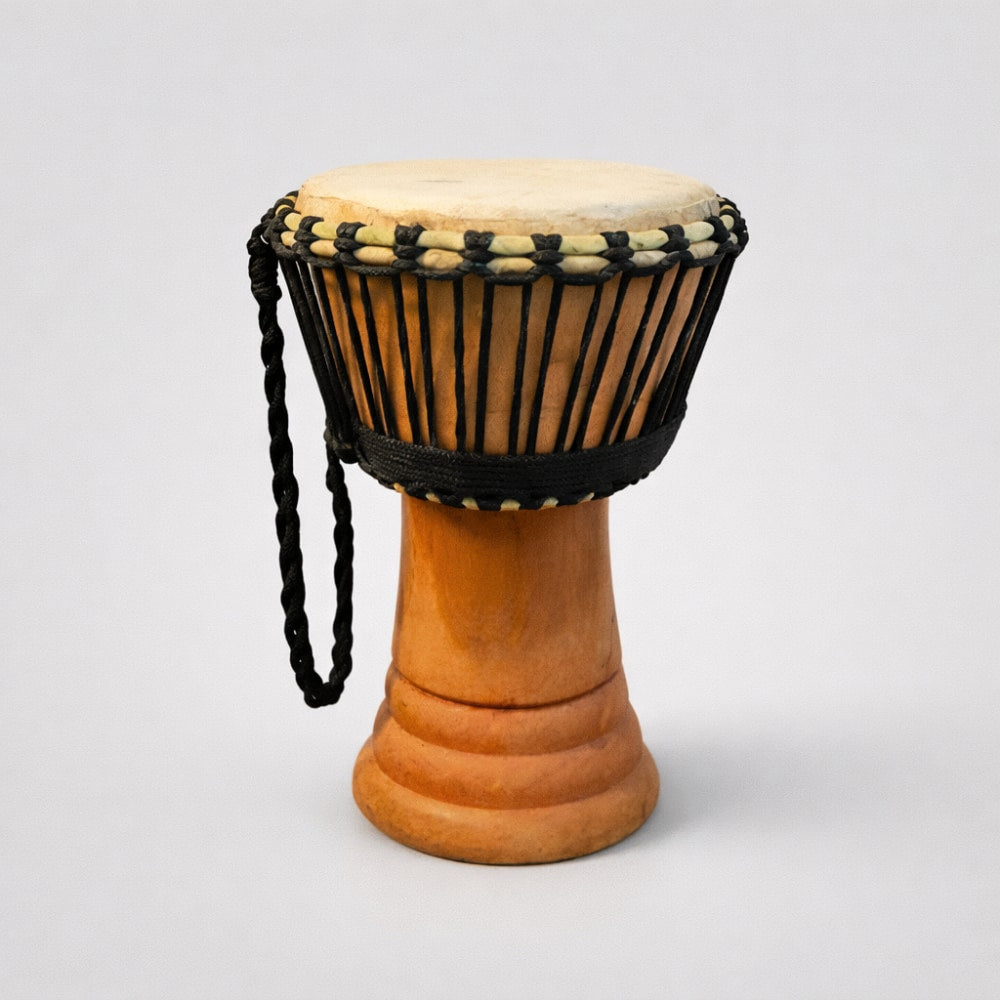
A djembe is adjusted by changing the tension of the rope system running down the shell: tightening raises the pitch by pulling the head down evenly, while loosening lowers it. Rope tuning relies on friction, adjustments should be made gradually and evenly around the drum, working in small increments rather than pulling one section too hard to avoid stressing the skin or damaging the rope. If the drum sounds dull, loses clarity, or feels soft under the hands, tension has likely dropped—often due to humidity, seasonal changes, or regular playing—so light, periodic adjustment over multiple sessions is normal and part of caring for a natural-skin djembe.
Avoiding Skin Damage
Natural skin is strong but sensitive to sudden changes. Never tune a cold drum aggressively, as dry or cold skin is more likely to crack. Avoid placing your djembe near heaters, fires, or direct sunlight for long periods. If the skin feels extremely dry, allow it to acclimatise naturally before playing or tightening.
Long-Term Care and Maintenance
Regular care keeps your djembe responsive and prevents unnecessary wear. Wipe the shell and ropes occasionally to remove dirt and moisture, especially after outdoor or high-energy sessions. Store your drum in a dry, stable environment away from direct heat or damp conditions, and always use a protective case when transporting it. Light, frequent tuning is better than heavy adjustments, as it maintains even tension and reduces long-term strain on the skin and rope system. With consistent care, a well-made djembe will retain its tone, feel, and reliability for many years.
Learn to Care for Your Drum With Confidence

The Complete Djembe Drum Player is a clear, practical guide for anyone who wants to properly look after their drum while improving their playing. It includes step-by-step tuning guides, diagrams, structured practice sessions, and beginner-to-advanced lessons that help you understand not just how to maintain your djembe, but why it works the way it does. Designed for players with no prior musical experience through to advancing drummers, this downloadable eBook gives you everything you need to keep your drum sounding its best while building confidence, rhythm, and technique.