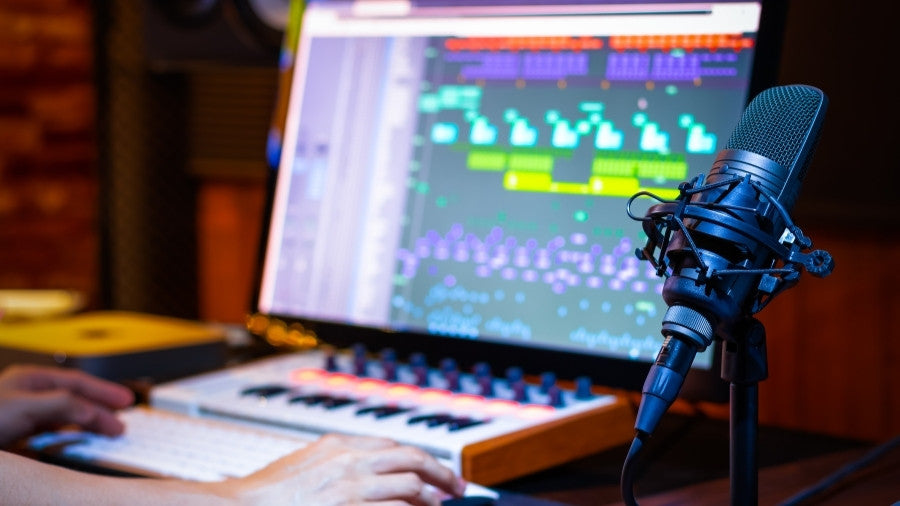
Music production is the process of turning raw musical ideas into a finished, polished track. It combines creativity, technical skill, and software to record, edit, mix, and master songs. A producer oversees the entire workflow—from composition and sound design to arrangement and final output—balancing artistic vision with audio precision. Unlike DJs or sound engineers, producers shape the full sonic experience, guiding everything from instrumentation to mood. Modern production often happens entirely in a home studio, using digital audio workstations (DAWs) like GarageBand, FL Studio, Logic Pro X, or Ableton Live.
Essential Equipment for Beginners
Getting started in music production doesn’t require expensive gear—just the right essentials. A reliable computer with at least 8GB of RAM, a Digital Audio Workstation (DAW) such as GarageBand, Reaper, or Logic Pro X, and an audio interface form the foundation. Add studio monitors or headphones for accurate sound, a MIDI keyboard for composing melodies, and a microphone for recording vocals or instruments. Set up your home studio with a sturdy desk, organized workspace, and basic acoustic treatment like foam panels or rugs to ensure clean, balanced sound.
AI and Music Production Tools
AI is transforming how beginners learn and create music. Tools like Soundful, AIVA, and Amper can generate melodies, beats, or full tracks, while ChatGPT helps brainstorm lyrics, song structures, or mixing advice. Free plugins and VSTs such as Spitfire LABS, Dexed, and TDR Nova add professional-quality sounds without cost. DAWs like GarageBand, BandLab, and Cakewalk are free and beginner-friendly, making professional production accessible from any laptop.
Jobs and Careers in Music Production
Music production opens doors to various roles: studio producer, sound designer, mixing engineer, mastering engineer, or freelance creator. Many producers work independently, selling beats, offering mixing services, or creating content for ads, film, and video games. Entry-level jobs and internships are available at studios in London, Los Angeles, and Mumbai, and online freelance platforms offer remote opportunities. Success depends on building a portfolio, networking, and continuous learning rather than formal qualifications.
Events, Networking, and Communities
Networking is vital in music production. Join Discord groups, Reddit communities, and Facebook forums to share tracks and get feedback. Attend music production workshops, retreats, or local meetups to connect with mentors and collaborators. Follow YouTube channels, podcasts, and blogs dedicated to production tips, reviews, and tutorials to stay current.
Music Production Courses and Education
Formal training can accelerate your growth. Top programs include Berklee College of Music, NYU Steinhardt, and York St John University, while online options like Udemy, Coursera, and Skillshare provide affordable, self-paced learning. Workshops and bootcamps in London, Mumbai, and Los Angeles teach hands-on techniques in mixing, mastering, and sound design.
Ready to start producing your own music?
Explore our Music Production Course (Coming Soon) You will learn professional techniques, set up your studio, and start making tracks that sound ready for release.


