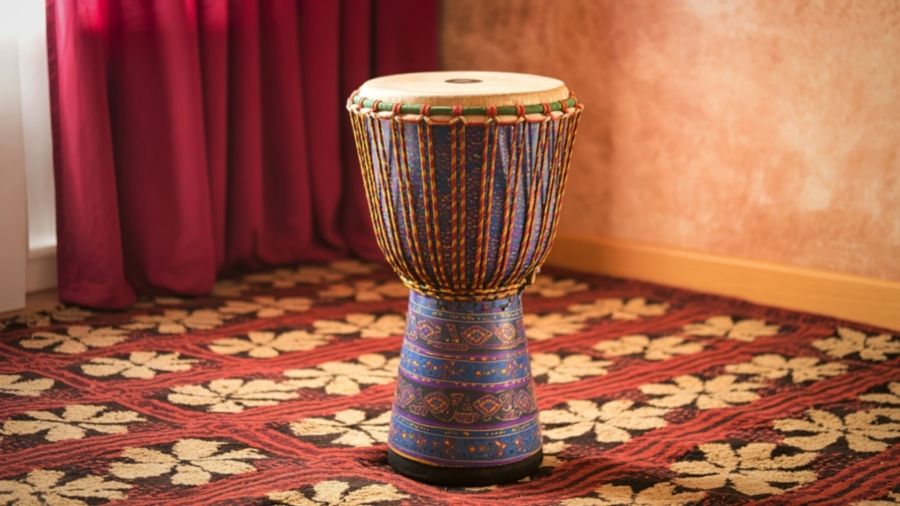
The Djembe drum is a powerful, resonant instrument rooted in West African cultural tradition, often used for community gatherings and sending rhythmic messages. However, that rich resonance, which is so central to its power, becomes a major challenge when practicing in an apartment or shared home. The high-pitched slaps and deep bass tones can quickly disrupt others.
The great news is that yes, it is absolutely possible to practice the Djembe quietly. The solution lies not in playing a different instrument, but in controlling the drum's resonance through simple muffling techniques. Before you abandon your daily routine, explore these solutions to turn your loud, booming Djembe into a quiet, focused practice tool.
Quiet Muffling Practice Techniques
The primary method for quiet practice is to use everyday household items to dampen the vibration of the drumhead, allowing you to maintain your technique and sense of timing without creating significant volume. The most effective and simplest technique is the Towel Muffle: take a heavy blanket, fleece jacket, or—best of all—a thick towel and lay it directly over the drumhead, folding it in half if needed to achieve adequate dampening; this method significantly cuts sound, allowing you to practice for hours without complaint, though it will change the rebound slightly.
Alongside this, soft strokes and technique are essential—intentionally practice the three core sounds (bass, tone, and slap) as quietly as possible using lighter, more controlled strokes, an exercise that improves dynamic control and finesse while adding valuable variation to your drumming.
Take advantage of the drum’s design with the Bottom Block: because the djembe’s goblet shape projects sound out of the bottom opening, lightly positioning the base against a soft surface like a thick couch cushion or a stack of blankets can reduce sound projection by dampening it without completely killing the tone.
The Small Drum Solution
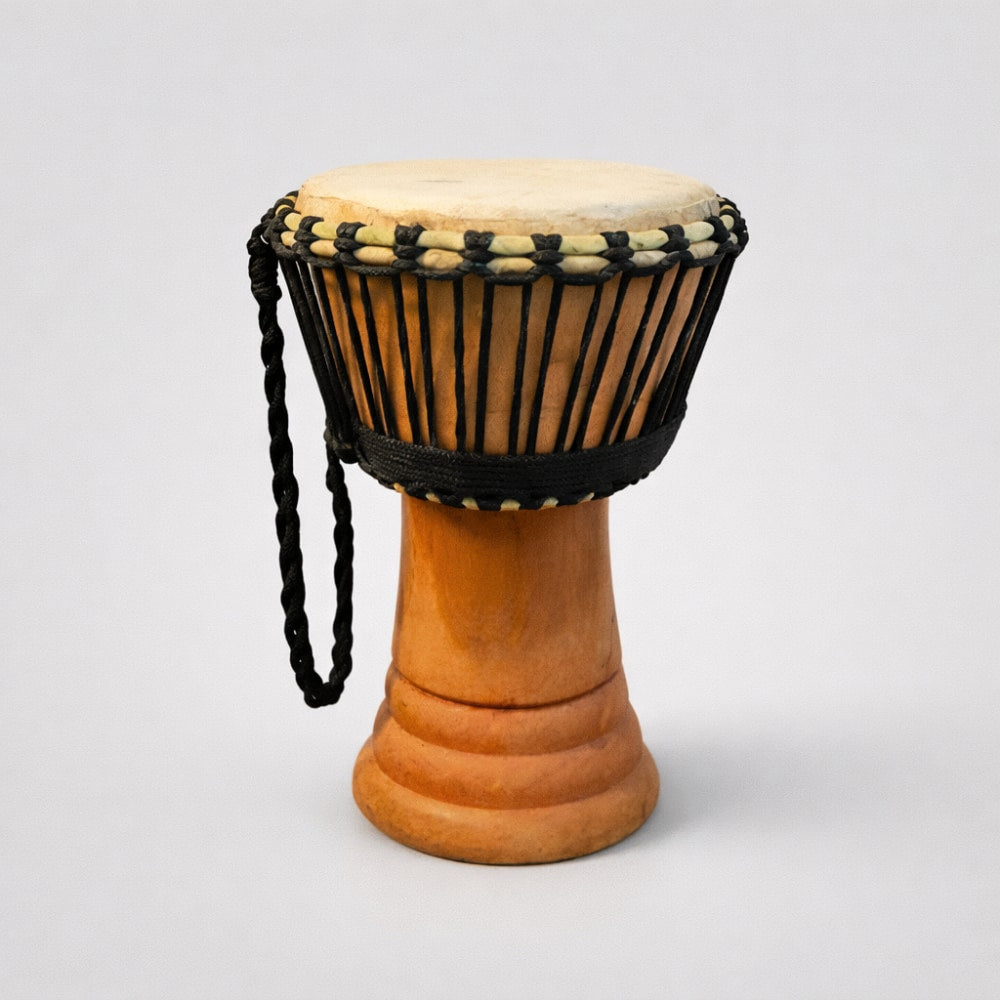
If muffling your full-size Djembe feels too restrictive on your technique, the other option is to purchase a drum specifically for practice, since the size of the drum directly impacts its volume and depth. Smaller drums equal quieter sound—smaller Djembes naturally produce a brighter, sharper voice and far less powerful bass than larger drums, which generate a deeper, louder tone.
This creates a clear practice advantage: a Djembe around 6 inches is lightweight, easy to carry, and ideal for travel or light, quiet practice, allowing you to focus on hand technique and rhythmic consistency without relying on towels or muffling. Over time, this small drum becomes a dedicated, low-volume practice tool, perfectly suited for apartment living while still supporting meaningful daily rhythm exercises.
The Complete Djembe Player

You have now solved the noise problem, clearing the way for consistent daily practice. The next challenge is learning the technique and rhythm that turns simple tapping into confident, expressive drumming.
Many drummers struggle with coordination, achieving clean tone, and progressing to advanced patterns. The Complete Djembe Drum Player eBook is the single, comprehensive resource that solves this problem. It takes you from the absolute basics (correct posture and hand technique) to advanced techniques like accents, flams, and muted strikes. The eBook provides essential rhythm exercises, detailed notation, and troubleshooting guides that build the muscle memory and rhythmic flow needed to play like a professional.